
retreat curatorby milena chernomorets

Card meanings

The Hierophant Meaning: Tradition, Upright and Reversed

The Hierophant is the tarot's card of inherited knowledge: teachers, traditions, institutions and the agreements a community lives by. He stands for learning through a proven path rather than inventing everything alone. In a reading he asks which rules you are following, and whether you chose them or simply received them.

A thin band crown seen at three quarters, one pale stone on the front
tradition · teaching · belonging · vowsMajor arcanaCard V
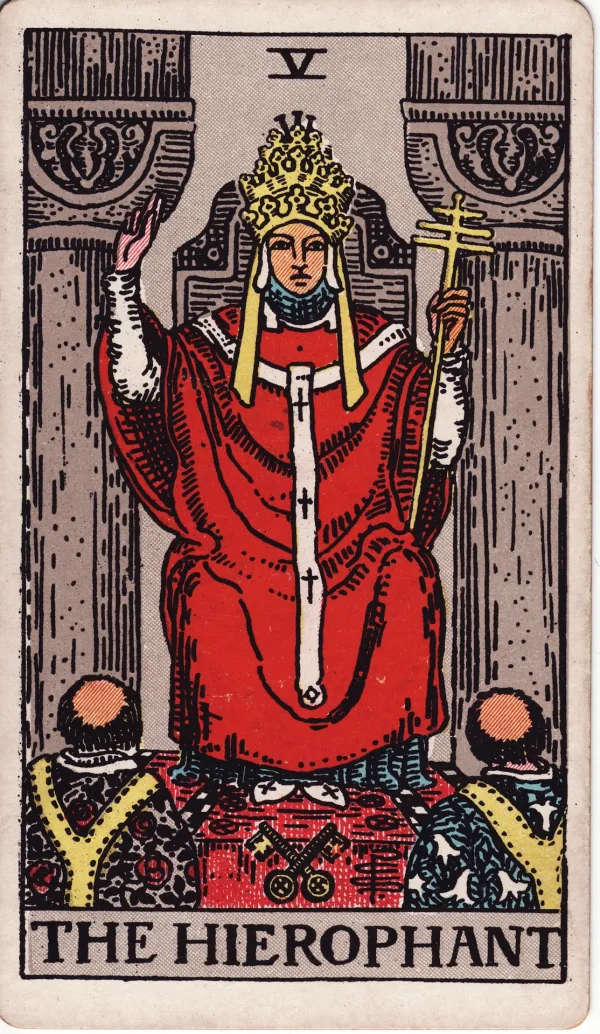
The Hierophant, the Rider Waite Smith scan

Both directions

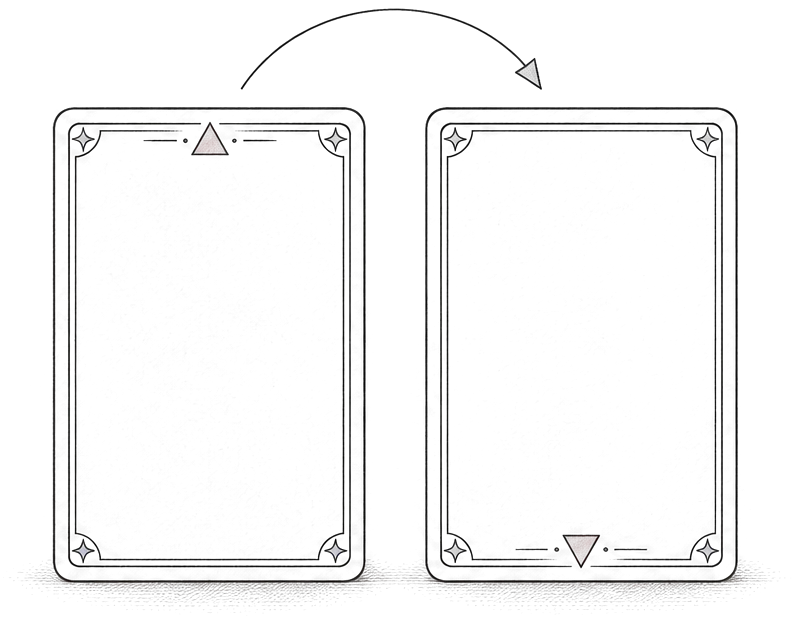
Same card, two directions. Upright is the card doing its work. Reversed is the same energy stuck, overdone or turned inward, so the reading changes tone without changing subject.

Two identical blank cards side by side, the second turned upside down

One card, two directions

The Hierophant, the Rider Waite Smith scan

Upright

What does The Hierophant mean upright?

There is a path here that others have already walked, and walking it will save you years. Find the teacher, join the group, take the course properly instead of assembling fragments from the internet. The Hierophant also covers formal commitments: marriage, contracts, membership, anything that binds you publicly. Such vows are not a cage when you mean them; they are the structure that lets trust grow. This card values continuity and doing things in the accepted way. That can feel slow. It is also how skill, credibility and belonging are actually built.
The Hierophant turned upside down

Reversed

What does The Hierophant reversed mean?

Reversed, the tradition no longer fits, and pretending it does is costing you something real. Maybe the institution asks for loyalty it does not return, or you are living by a family rule nobody has examined since childhood. This is the card of stepping out of line thoughtfully: not rebellion for its own sake, but the honest admission that this belief, this church, this industry norm is not yours. Keep what is true and leave the rest. It can also mean the opposite, that you skipped the fundamentals and now need to learn them properly.

Where it lands

The two rooms people ask about first. Both readings describe your side of the situation, which is the only side a card can speak for.

Where it stands

Its place among the twenty two

VSetting out

Twenty two major arcana in order

What does The Hierophant mean in love?

This card leans towards the formal and the long: meeting families, moving in, an engagement, shared traditions. It asks whether you both want the same kind of structure, or whether one of you is performing a script inherited from parents. If your relationship does not fit the standard shape, the Hierophant is not a verdict, only a question about whose approval you are seeking.

What does The Hierophant mean for work and money?

Favours study, mentorship, certification, established companies and work inside a system with clear standards. A good time to learn from someone better than you, or to teach what you know. Money here comes through legitimacy: credentials, contracts, reputation. Improvising around the rules will cost more than following them. Reputation compounds slowly and then pays for years.

The Hierophant, the Rider Waite Smith scan

One question

What does The Hierophant ask you?

Which rule am I living by that I never actually agreed to?

Take it to a notebook rather than to a decision. A card is useful when it makes a question sharper, not when it hands you a verdict.

Questions

What else do people ask about The Hierophant?

Does the Hierophant mean marriage?

He can point to a formal commitment, marriage included, especially alongside cards about partnership. On his own he means the wider theme of vows and shared rules rather than a date or an event.

Is the Hierophant about religion?

Religion is one form of him, not the whole card. Any body of inherited knowledge counts: a profession, a school of thought, a family tradition, a craft passed down by a teacher.

Why does the Hierophant feel restrictive?

Because he asks you to submit to a standard for a while. That is uncomfortable when you value independence, and useful when you are trying to build something that needs a foundation you cannot invent alone.

Two ways on

A card answers better when you bring it a real question.

One card a day builds a feel for the deck faster than reading about all seventy-eight. And a plain yes or no question is the fastest way to find out what you were hoping to hear.

Ask a yes or no questionPull the card of the dayBack to the tarot library

Read here as a language of symbols. Medical, legal and financial questions belong with a professional.

A candle in a holder, a cup and three cards face down on a table