retreat curatorby milena chernomorets

Tarot

How to Read Tarot Cards: The Question Does Half the Work

Tarot is a symbolic system for thinking. Seventy-eight cards give you a fixed vocabulary of human situations, and laying them out makes you say aloud the thing you already half know. That is why tarot is accurate about you and unreliable about events. It reads the shape of a situation and the direction you are carrying it, never a date and never another person's private mind.

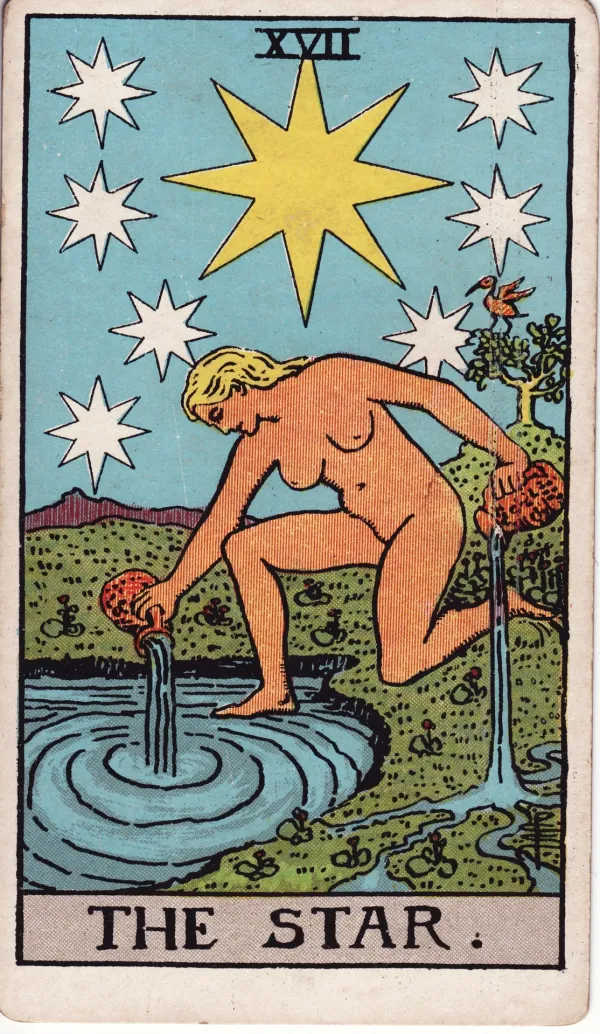
78 cardsRider-Waite-Smith, 1909
The Star from the Rider-Waite-Smith deck, water poured under open sky

Five steps

A reading in five moves, and the first one matters most.

None of this needs a ritual, a candle or permission from anyone. It needs one clear question and the patience to sit with an answer you did not order.

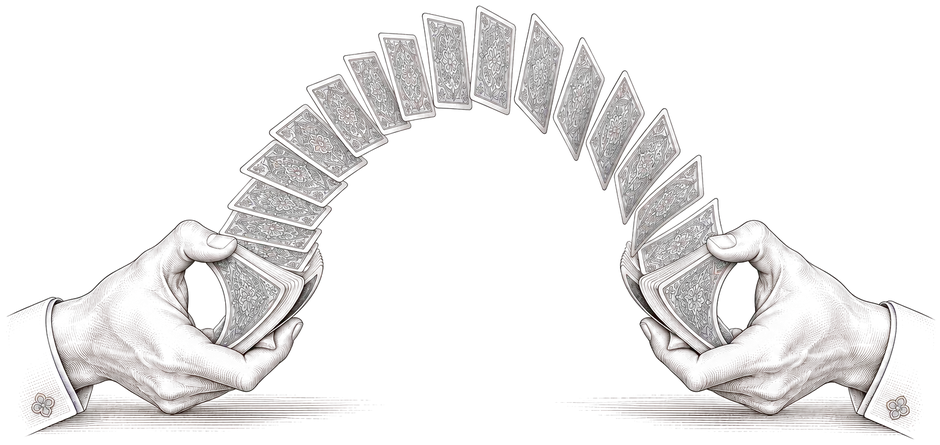
Two hands riffling a deck, the cards arching through the air

Ask something you actually want answered

The question does most of the work. Swap what will happen for what am I not seeing, or what is this costing me, and the cards suddenly have something to say. Write the question down before you touch the deck, so you cannot quietly change it halfway through.

Pick a spread that fits the question

Small questions want small spreads. One card for a day, three for a situation with a history, five for a relationship, ten when you are truly stuck. Pulling more cards than the question needs does not give you more clarity, it gives you more to argue with.

Shuffle until it feels finished

There is no correct number of shuffles and no ritual you are failing to perform. Hold the question in mind, shuffle the way that suits your hands, and stop when it feels done. Cut the deck if you like cutting it. The point is the pause, not the technique.

Read the picture before the book

Look at the card and say out loud what you see. Who is there, where are they looking, what is the weather doing, what does it remind you of. Only then open the meaning, and notice where the book agrees with you and where it does not. That gap is where your own reading grows.

Write it down and come back later

Three lines are enough. The question, the cards, and what you decided to do. A month later those notes are the most useful tarot book you own, because they are written in your language and about your life. This is also the fastest way to learn the deck by heart without trying to.

Accuracy and ethics

What the cards do, and where they stop.

A squared up deck beside a closed notebook on a pale table in late afternoon light

What it is honestly good at

A spread is a structured way of saying the thing you have been walking around. It gives a situation a shape, names the part you keep leaving out of the story, and shows where you are already heading. Readers call that uncanny. Most of it is the effect of a clear question answered in front of pictures that will not flatter you.

Where it stops

It does not know dates, lottery numbers, test results or what someone is thinking while they are out of the room. Anyone who tells you otherwise is selling certainty, and certainty is the one thing cardboard cannot print. Nothing here replaces a doctor, a lawyer or an accountant, and no card is a reason to stay somewhere that hurts you.

Questions

Asked most often about tarot.

How do I read tarot cards?

Ask one clear question, choose a spread that fits it, shuffle, and lay the cards face up in order. Read each card by what you see in the picture first and only then check the meaning, because your own reaction is part of the reading. Then read the cards as one story rather than as separate verdicts. That last step is what separates reading from looking things up.

Are tarot cards evil or dangerous?

No. A tarot deck is printed cardboard with a symbolic system on it, closer to a set of archetypes than to anything supernatural. It cannot summon anything, curse anyone or make a decision on your behalf. The only real risk is handing your judgement over to a reader who claims certainty, and that risk exists in any advice, with cards or without them.

Can tarot predict the future?

It cannot, and any honest reader will tell you the same. Tarot shows you the shape of a situation as it stands, the patterns you are repeating and the direction things take if nothing changes. That often feels like prediction, because people are consistent. But the cards describe a trajectory, not a fixed event, and the trajectory changes the moment you do.

How accurate is tarot?

Accurate about you, unreliable about events. A good reading names what you already half know but have not said out loud, and people describe that as uncanny precision. Ask it about the state of a relationship and it will be sharp. Ask it for a date, a lottery number or another person's private thoughts and you are testing it on something it does not do.

Can you read tarot for yourself?

Yes, and most readers do it far more often than they read for anyone else. The one honest warning is that you will be tempted to reshuffle until you get the answer you wanted. Pull once, write down what came, and sit with it even if you dislike it. Self-reading is a practice in noticing your own bias as much as in reading cards.

How do I choose my first deck?

Take one you like looking at, because you will study these pictures for hours. For a first deck, pick one where the minor cards show full scenes rather than bare symbols, so the images can teach you. The classic Rider-Waite-Smith is the safest start, and any deck built on its structure will do the same job. The old rule about a deck needing to be a gift is a myth, buy your own.
Where next

The cards ask the question. A week away is where the answer gets tested.

Milena runs small retreats where the same honesty shows up without a deck on the table. And if you would rather stay with symbols for now, your birth date already holds a card of its own.

Retreats with MilenaMake your Soul Card

Read here as a language of symbols. Medical, legal and financial questions belong with a professional.

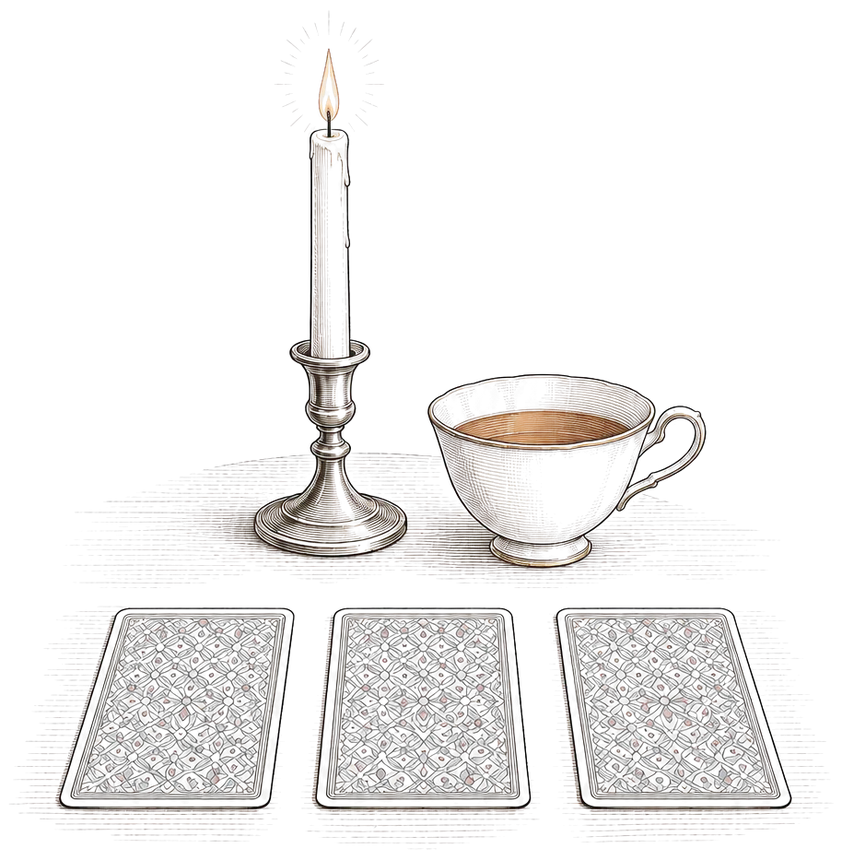
A candle in a holder, a cup and three cards face down on a table