Best Tarot Decks: 9 That Readers Keep Coming Back To
For a first deck the honest answer is almost always the Rider-Waite-Smith, and it has nothing to do with tradition. Its minor cards show full scenes rather than bare symbols, so the pictures teach you while you learn, and nearly every tarot book and course ever written describes exactly those images. Start elsewhere and you spend the first months translating. Almost every deck here is either that deck or a deck built on its structure, apart from the two that deliberately are not.
It is worth knowing this one even if you never buy it, because the meanings you will read everywhere online were written about these pictures.
Pamela Colman Smith and Arthur Edward Waite, 1909
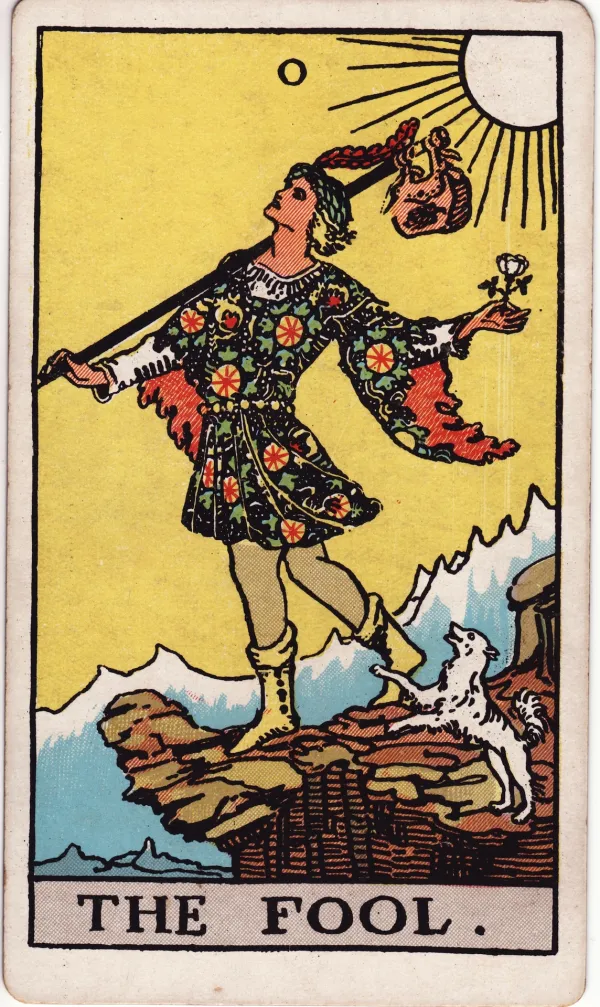
Rider-Waite-Smith Tarot
The one everyone learns on, plain and legible
Anyone starting out, and anyone who wants their readings to line up with what the books describe.
Why readers keep it
Pamela Colman Smith drew a full scene on every one of the seventy eight cards, which was new at the time and changed everything after it. You can read a card from what is happening in the picture before you know a single keyword. Almost every modern deck is a conversation with this one.
Eight more
Decks with a character of their own.
Some keep the classic structure and change the faces. Two of them refuse the classic pictures entirely and ask you to build meaning yourself. Read the vibe line first, it is the part that decides whether a deck will sit on your table or in a drawer.
Lady Frieda Harris and Aleister Crowley, 1969
Thoth Tarot
Dense, symbolic, unapologetically occult
Readers who already know the basics and want a system deep enough to disappear into for years.
Why readers keep it
Harris painted it over five years and every card shows it. Nothing here is decorative, the colour and the geometry carry meaning, and the deck rewards study the way a difficult book does. Readers who bond with it rarely go back to anything simpler.
French and Italian card makers, standardised by Nicolas Conver, 1760
Tarot de Marseille
Old, flat, stubbornly unromantic
Readers who want to build meaning from structure, number and colour instead of from a drawn scene.
Why readers keep it
The minor cards show pips rather than pictures, so nothing does the interpreting for you. That silence is the whole point. People who work with it say their readings got sharper the moment the deck stopped telling them what to feel.
Lisa Sterle, 2019
Modern Witch Tarot
Classic structure shot like a fashion editorial
Anyone who wants the standard meanings but wants the people on the cards to look like people they actually know.
Why readers keep it
It keeps the Waite-Smith scenes card for card, so everything you learn transfers to any other deck, and redraws them with a diverse contemporary cast, phones and sneakers included. It solved a real problem for readers who never saw themselves in the old art.
Kim Krans, 2012
The Wild Unknown Tarot
Ink, animals and a lot of white space
Intuitive readers who want the card to land before the mind starts explaining it.
Why readers keep it
Krans replaced people with animals and pared everything down to line and colour, and it became the deck that pulled a whole generation into tarot. Readings with it feel quieter and more instinctive. It is also one of the few modern decks that still looks fresh a decade later.
Chris-Anne Donnelly, 2019
Light Seer's Tarot
Warm, bohemian, softly lit
Self-reflection and shadow work, especially if harsher decks put you off entirely.
Why readers keep it
The art is gentle without being toothless, and the darker cards are handled with care instead of doom. It reads beautifully for emotional questions. A lot of people bought it as a second deck and quietly made it their first.
Matt Hughes, 2018
Ethereal Visions Illuminated Tarot
Art nouveau with real gold foil
Readers who want the object to be as beautiful as the practice, and anyone choosing a gift.
Why readers keep it
Hughes draws in the Mucha tradition and the foil catches light differently on every card, so the deck is a pleasure to hold. Under the ornament it follows Waite-Smith closely, so it stays fully readable. This is the deck people take out when someone asks to see tarot.
Mélanie Delon, 2020
Tarot de la Nuit
Night, velvet and quiet melancholy
Evening readings and anyone drawn to romantic, dreamlike imagery.
Why readers keep it
Delon paints portraits with an unusual amount of feeling in the faces, and the whole deck lives in low light. It is gorgeous and a little sad, which suits inner questions. Readers describe it as the deck they reach for when they want to be honest with themselves.
Brigit Esselmont and Eleanor Grosch, 2018
Everyday Tarot
Clean, modern, nothing to decode
A first deck, especially if the classic art feels dated or a bit heavy to you.
Why readers keep it
Flat colour, simple shapes and a small format make it easy to carry and easy to read at a glance. It keeps the standard meanings, so nothing you learn on it is wasted later. A very forgiving place to start.
Choosing
Pick by how you want to read, not by how the box looks.
Three honest routes in. Any of them works, and none of them is a level you have to earn before moving on.
1
You want the books to agree with you
Take the Rider-Waite-Smith or a deck built card for card on it, such as the Modern Witch or the Everyday Tarot. Every keyword, every video and every guide you find will describe the card in front of you, and nothing you learn will have to be unlearned later.
2
The old art leaves you cold
Then it will stay in the drawer, and a deck in a drawer teaches nothing. Take the Light Seer's for inner questions, the Wild Unknown if you read by instinct, or the Tarot de la Nuit for evenings. The structure underneath is the same, only the faces change.
3
You already read and want depth
The Thoth and the Tarot de Marseille are the two that ask something of you. Marseille strips the pictures away so you build meaning from suit, number and colour. Thoth buries meaning in colour and geometry and rewards years of it. Neither is a good first deck, both are excellent second ones.
Nothing here is ranked and nothing is sponsored. Decks stay in print for decades, so take your time and choose the pictures you want to look at for hours.
Questions
Asked most often about decks.
Which tarot deck is best for beginners?+
The Rider-Waite-Smith, or any modern deck that follows it card for card. The reason is practical rather than sentimental: its minor cards show full scenes, so the pictures do part of the teaching, and almost every book, app and guide you will meet describes those exact images. A deck with plain pip cards is a beautiful choice for your second deck and a slow one for your first.
Does a tarot deck have to be a gift?+
No. That rule appears nowhere in the history of the cards and seems to have started as a bit of twentieth century folklore. Choosing your own deck is part of the practice, because you are choosing the pictures you will sit with. Buy the one you keep looking at.
How many tarot decks do I need?+
One, for a long time. Readers who stay with a single deck for a year read it far better than readers who own nine, because the meanings settle into images rather than words. A second deck is worth adding when your first one starts to feel like it has only one tone of voice.
Do I need to cleanse a new deck?+
Only if it matters to you. There is no mechanism that requires it and no harm in it either. What genuinely helps with a new deck is going through all seventy eight cards in order once, looking at each one, before you ever lay a spread. That is the ritual that changes your readings.
Where next
A deck is the easy part. The reading is the practice.
Every card in the classic deck already has a page here, upright and reversed, and the layouts are written out position by position. You can learn the whole system before you buy anything at all.