retreat curatorby milena chernomorets
Chakras

Chakras

Chakras: A map drawn from attention, not from anatomy

Chakras are a model that came out of the yogic and tantric traditions, a way of naming centres of felt experience along the line of the spine. They are described as places where attention, breath and emotion gather, not as organs a surgeon could point to, and no anatomical study has ever found them as physical structures. That is an honest limit and it does not make the model useless. Used as a map of attention it gives ordinary states — a tight throat before speaking, a heavy belly around money — a name, a location and something to practise with.

Seven centres, counted from the ground upA map of attention, named as one
A bare back in soft window light, with a vertical line of prism colour running along the spine

What are chakras actually supposed to be?

In the texts they belong to the subtle body, a body of experience rather than of dissection. Each centre is described as a wheel, with a number of petals, a seed syllable, an element and a figure to hold in mind. The point of the description was never biology. It was to give a meditator somewhere precise to place attention and something specific to hold there. When you say your heart sank or your throat closed, you are already speaking this language. The model simply organises those locations, gives each one a set of themes, and ties them to practices you repeat.

Where did the idea come from?

The oldest layer is in the Upanishads, where the talk is of vital breath and the channels it moves along. Tantric yoga later worked this into practice, with centres to visualise, syllables to sound, and a force to draw up the spine. Different schools counted differently, four centres, six, nine. The version the West inherited came through one Bengali manual, the Sat-Cakra-Nirupana, translated into English about a century ago, and that single lineage got treated as the whole tradition. The rainbow — red at the base, violet at the crown — is not in the sources at all. Western writers added it later, borrowing from colour theory.

03

Why does science not find them?

Because two different claims get mixed together. One is anatomical: that structures sit in the body at these points, that instruments ought to detect them, that a scan could show a blocked one. Nothing supports that. Dissection finds nerve plexuses and glands near some of the locations, which is a resemblance of geography, not a match of things. The other claim is about experience: that attention held low in the belly or in the hollow of the throat produces a reliable, describable state. That one is testable in the ordinary way, by doing it, and for a lot of people it holds up. Keeping the two claims apart is what makes the subject discussable without embarrassment.

04

What are the seven and what is each about?

Counting from the base of the spine upward. Muladhara at the perineum holds safety, money, belonging, the sense of having ground. Svadhisthana below the navel holds appetite, sex, pleasure and creative pull. Manipura at the solar plexus holds will, agency and the nerve to act. Anahata at the heart holds affection, grief and the ability to stay open after being hurt. Vishuddha at the throat holds speech, saying the true thing, being heard. Ajna between the brows holds clear seeing, intuition and judgement. Sahasrara at the crown holds the sense of belonging to something larger than your own case. Read the list as themes for attention, not as switches with positions.
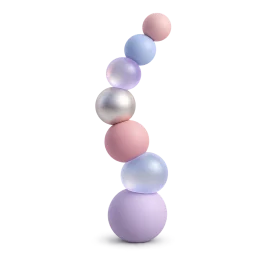

The seven

Which centre is which, counted from the ground up.

The list runs the way the body does, the base of the spine at the bottom and the crown on top. Each row opens a page with the signs people describe, three practices, the stones the tradition hands you and three postures.

Read from the bottom up, base of the spine first and crown last. The petals grow with the count.

What does it actually mean to work with this system?

In practice it is less exotic than it sounds. You choose one theme, you sit, and you put attention on one place in the body for a few minutes. You slow the breath and let it move in that area. You take a posture that opens it, a hip opener low down, a backbend at the chest, a gentle stretch through the throat. You sound a syllable and feel where it buzzes. Then you write for five minutes about what came up. The repetition is where the value sits. The diagram is a filing system for your own observations, and if you dropped the diagram and kept the sitting, most of the benefit would stay.

What do people get wrong about chakras?

Four things. That a blocked centre causes a named illness — it does not, and thyroid disease is not a throat problem in this sense. That a crystal laid on the chest does the work while you scroll — the stone marks the practice, it is not the practice. That someone can scan or test which of yours are closed — no such instrument exists and no valid quiz does either. That people come in opened and broken kinds. Three words worth knowing. Nadi means a channel through which vital energy is said to run. Prana is that vital energy, breath understood as life force. Kundalini is the force described as coiled at the base of the spine and drawn upward by practice.

An honest boundary

When this belongs with a specialist rather than a practice

Symptoms belong to a doctor. Pain anywhere, numbness or tingling that keeps coming back, breathlessness, a lump in the throat or trouble swallowing that has not gone away, a voice that stays hoarse, low mood that has not lifted for two weeks — these are medical questions and not one of them is a chakra question. Get them looked at first, then practise if you want to. Nothing here diagnoses anything or replaces care.

Questions

What people ask before they try any of this.

How do I know which chakra is blocked?

You do not, in any strict sense. What you can do is notice which theme is loud right now: money and safety, appetite, will, closeness, speaking, clarity. That theme points at a centre, and that is as far as honest guessing goes. Treat it as a place to start practising rather than as a finding about yourself.

How many chakras are there in total?

Seven is the number the modern system uses, and it comes from one strand of the tradition. Other schools counted four, six, nine or many more, and some added centres in the palms, the feet and above the head. The seven are popular because they are teachable, not because a count was ever settled.

Do chakras have anything to do with the nervous system?

Some of the locations sit near major nerve plexuses and endocrine glands, and people often offer that as proof. It is better read as a coincidence of geography. The old maps were built from what practitioners felt, and sensation clusters where the body is densely innervated. That explains the overlap without turning the model into anatomy.

Which chakra is linked to money?

The root centre, Muladhara, is the one the tradition links with ground, shelter and having enough. Some teachers add the solar plexus, since earning takes nerve and follow through. Neither link is a financial instrument. What the practice can plausibly affect is how you feel when you look at your accounts, and that is not nothing.

Can I work with chakras if I am religious?

Many people hold both, treating the centres as a vocabulary for attention rather than as a set of beliefs. Others find the tantric frame incompatible with their faith, and that is a reasoned conclusion rather than a lack of openness. If it matters to you, ask inside your own community instead of asking a wellness account.

Where next

A map is worth as much as the week you spend walking it.

Two pages carry the practical part: the one that turns the system into a daily ten minutes, and the first centre, where almost everyone starts. The colours people read around each other are next door.

Work with one centreRead the root chakraGo to the aura

Read here as a language of symbols. Medical, legal and financial questions belong with a professional.