you keep a job you dislike because leaving it feels physically dangerous, not merely risky
Root Chakra: Meaning, Blocked Signs and How to Open It
The root chakra is the first of the seven centres, placed at the base of the spine, and the tradition credits it with the plainest things in a life — shelter, food, money that covers the month, a body that feels like a safe place to live. In yoga this is called the energetic anatomy of the body, and it is honest to say out loud that it is a map of attention rather than an organ anyone has ever found on a dissection table. Teachers describe a steady root as the ability to take a risk without the ground tilting under you. Everything above it is said to rest on this one.
Sanskrit MuladharaMantra LAMRed in the modern systemThe base of the spine, at the pelvic floor
Read from the bottom up, base of the spine first and crown last. The petals grow with the count.
How this is described
What do people mean by a blocked root chakra?
Four descriptions people give, borrowed from the way the tradition talks. None of them is a test, nothing here is measurable, and a state that lasts belongs to a doctor rather than to a diagram.
sleep comes late because the mind runs a nightly audit of everything that could collapse
you move house often and none of the addresses ever starts to feel like yours
your shoulders are up near your ears by noon and you cannot say why
Three practices
What to actually do this week.
Short, repeatable and dull on purpose. Ten to fifteen minutes a day for a week does more than one long session you never repeat.
Four in, eight out
Sit on a firm chair with both feet flat on the floor and your palms heavy on your thighs. Breathe in through the nose for four counts, out through the nose for eight. Keep the exhale unforced. Do twenty rounds, about four minutes. Then sit for one quiet minute before you stand up.
Ten minutes barefoot
Take your shoes off and walk slowly for ten minutes, indoors or on grass, at half your usual speed. Land heel first, then the outer edge, then the toes, and notice the floor pushing back. Count ten steps, pause, feel your weight, walk on. Do it at the same hour daily for a week.
Humming LAM low
Sit cross legged or on your heels, back long, and say the syllable LAM out loud on one low note. Hold each one for a full exhale, then breathe in silently. Nine repetitions is enough. Put one hand on your lower back and feel where the sound vibrates rather than listening to how it sounds.
Three stones
Which stones are given to the root chakra?
What the tradition hands you for this centre, and why each one. Three names, three reasons, and the reason matters more than the name.
Three postures
Where the body meets the theme.
One standing, one opening, one resting. Take them slowly, breathe into the area the centre is placed in, and stop where the stretch turns into pain.
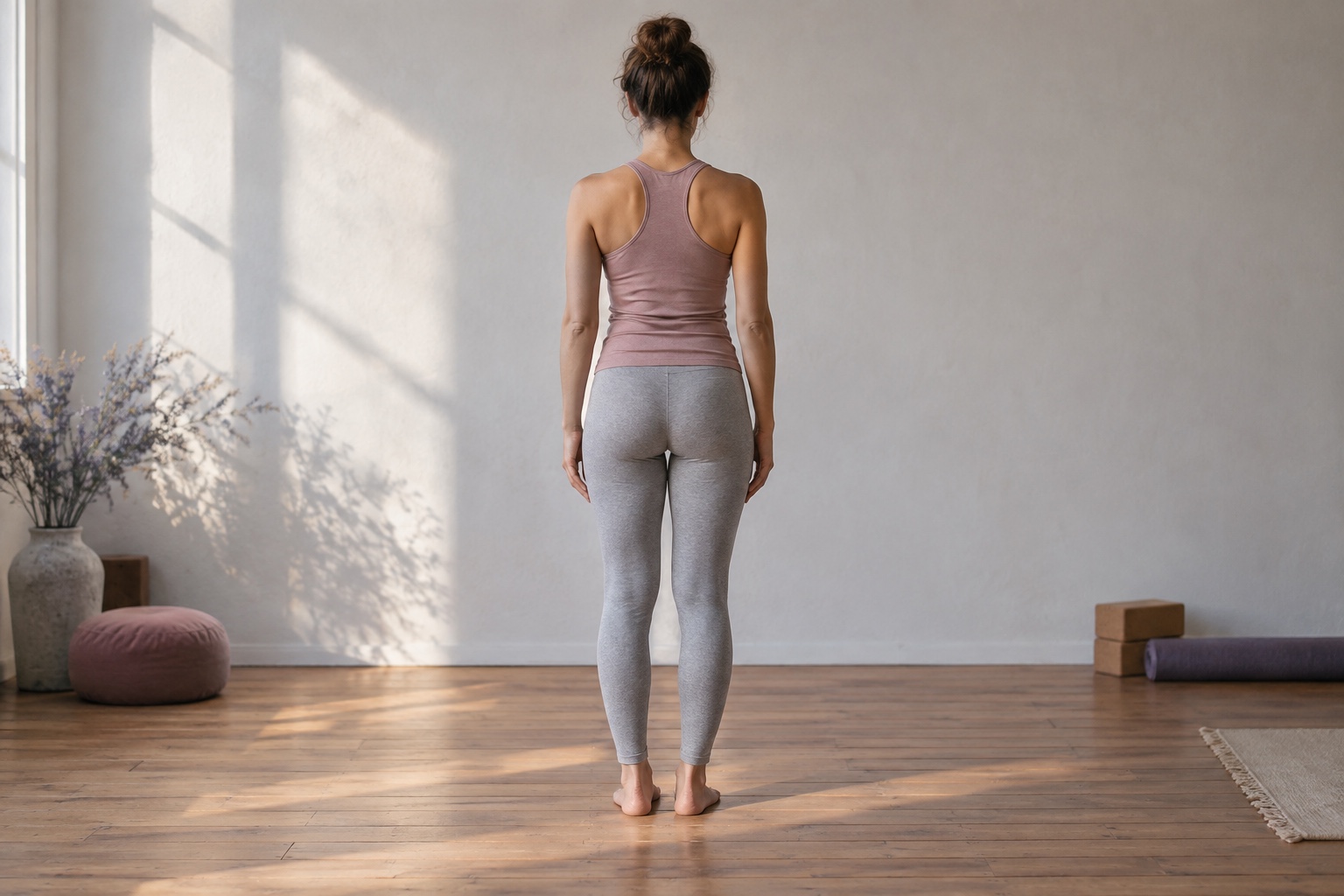
Tadasana, mountain pose
Standing still with weight spread evenly through both feet is the whole practice, and it is harder than it sounds.
Malasana, garland squat
A deep squat asks the hips and pelvic floor to soften, which is where this chakra is said to live.
Balasana, child pose
Folding forward with the forehead down is the position people take when they need holding rather than effort.
Questions
What people ask about the root chakra.
How do I know my root chakra is blocked?
You do not know it, you notice a pattern and borrow the word for it. There is no measurable test and no scan that shows a chakra. What people describe is a stretch of months where safety feels thin, sleep is shallow and every decision is weighed against the worst case. That is a description of your own state, not a diagnosis of anything.
Can a blocked root chakra cause back pain or anxiety?
Tradition links this centre to the legs, the lower back and the sense of threat, and you will read confident claims built on that link. They are not medical findings. Back pain and anxiety have causes a doctor can examine, and both deserve that examination first. Chakra language can describe how the state feels to live inside. It cannot explain where it came from.
Where is the root chakra located in the body?
At the base of the spine, around the pelvic floor and the tailbone, is the placement every text agrees on. Some teachers extend it down the legs to the soles of the feet, since that is the part of you actually touching the ground. Both descriptions are pointing at attention rather than tissue, so use whichever one you can feel more easily.
The other six
Which centre is loud for you this week?
Two ways on
A centre opens through a week of small repetitions, not through reading.
Ten minutes, the same ten every day: breath into one area, one posture, one syllable, five minutes of writing. A week of that moves more than an evening of reading.
Work with one centreSit for ten minutesBack to the seven
Read here as a language of symbols. Medical, legal and financial questions belong with a professional.