


01
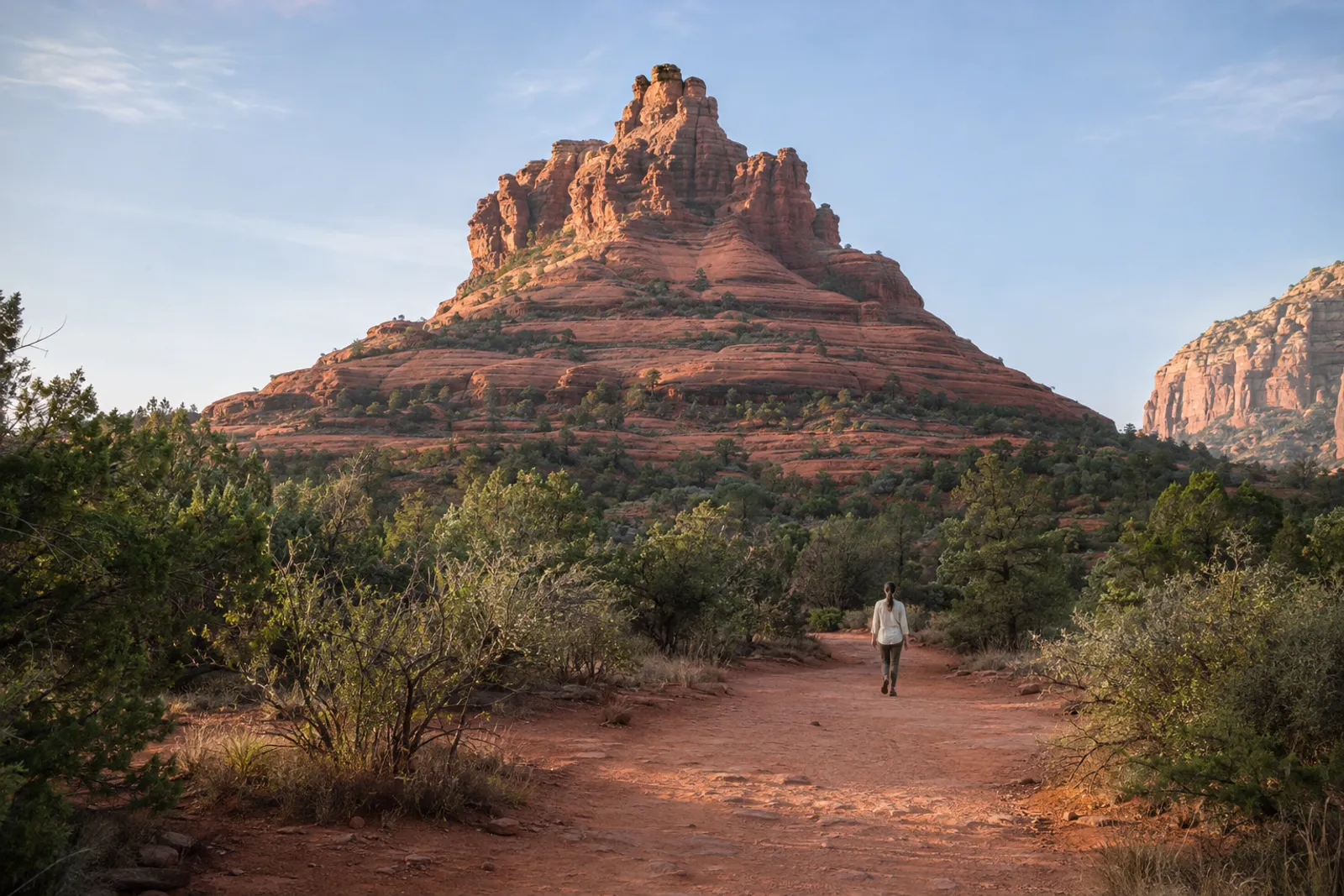
Bell Rock
Masculine energy: strength and footing.
Bell Rock Pathway, 3.5 mi one way with 185 ft of climb. The easiest of the 4.
Guide
A vortex is what Sedona calls a place where the earth’s energy gathers and people feel it in the body. The 4 everyone names are Bell Rock, Cathedral Rock, Boynton Canyon and Airport Mesa, each with its own trail at the edge of town.
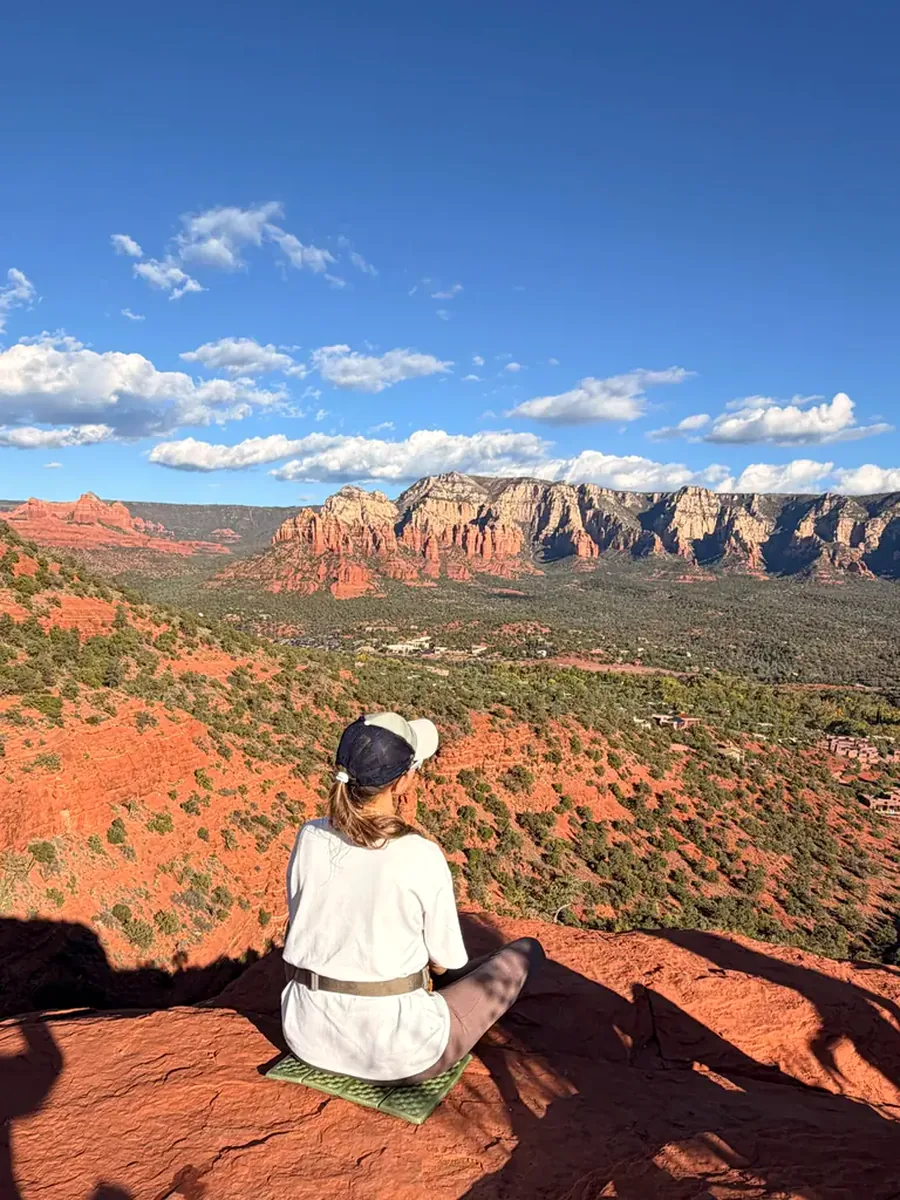
Here they say the energy at these spots either rises out of the ground or spirals down into it. Rising energy is called masculine: it lifts you and gives you the push to act. Inflowing energy is called feminine: it turns you inward, toward feeling and toward your line. Some places hold both.
Page Bryant, a channeler, was the first to name the energy centres of Sedona. People have come to sit on them ever since, to meditate and to ask their questions.
Bell Rock and Cathedral Rock stand south of town along Highway 179. Boynton Canyon lies to the northwest, and Airport Mesa sits right in town.
Masculine energy: strength and footing.
Bell Rock Pathway, 3.5 mi one way with 185 ft of climb. The easiest of the 4.
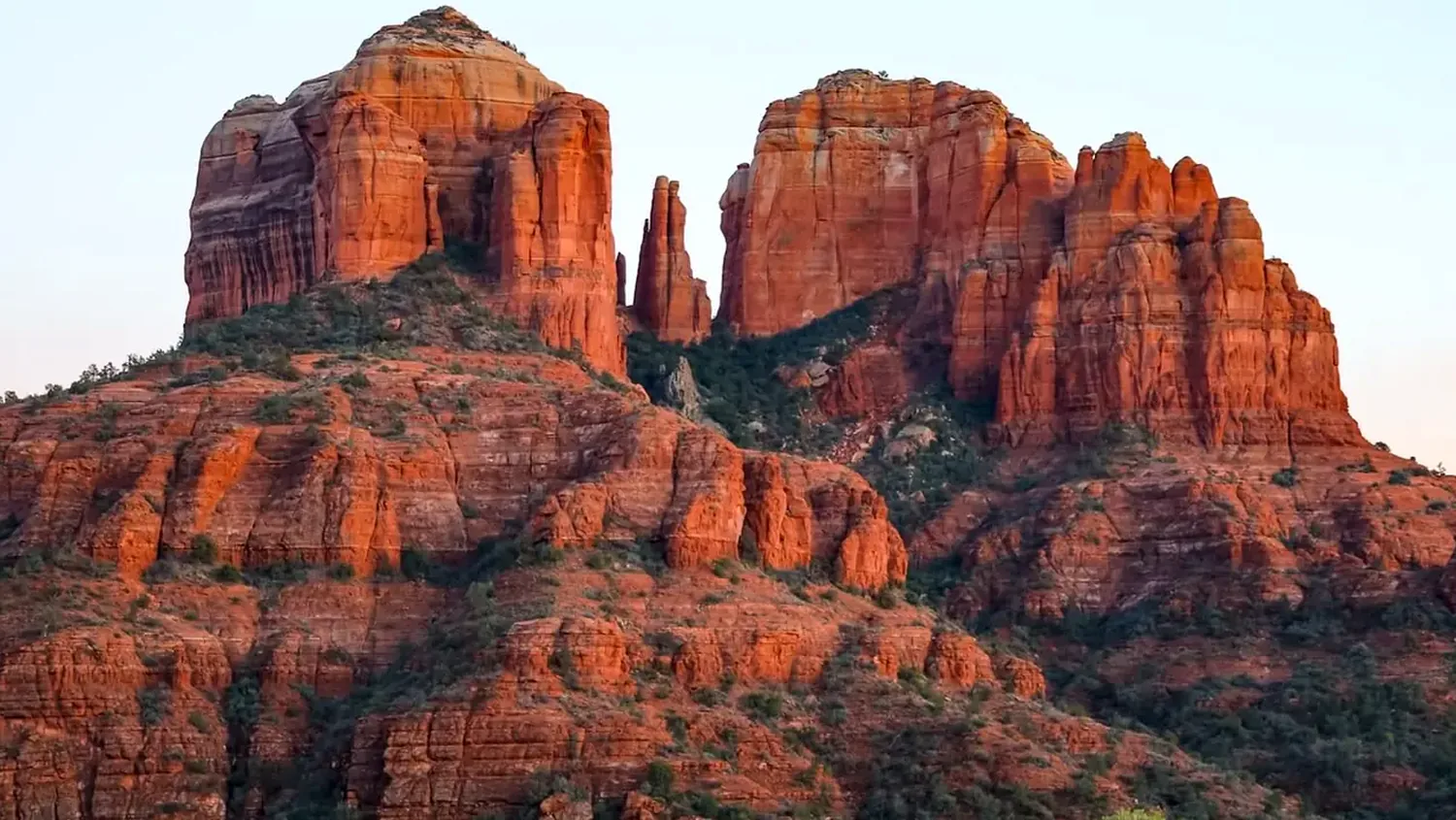
Feminine energy: the heart, and tears that waited for years.
1.1 mi round trip and 669 ft up bare rock. More a climb than a walk, with no shade.
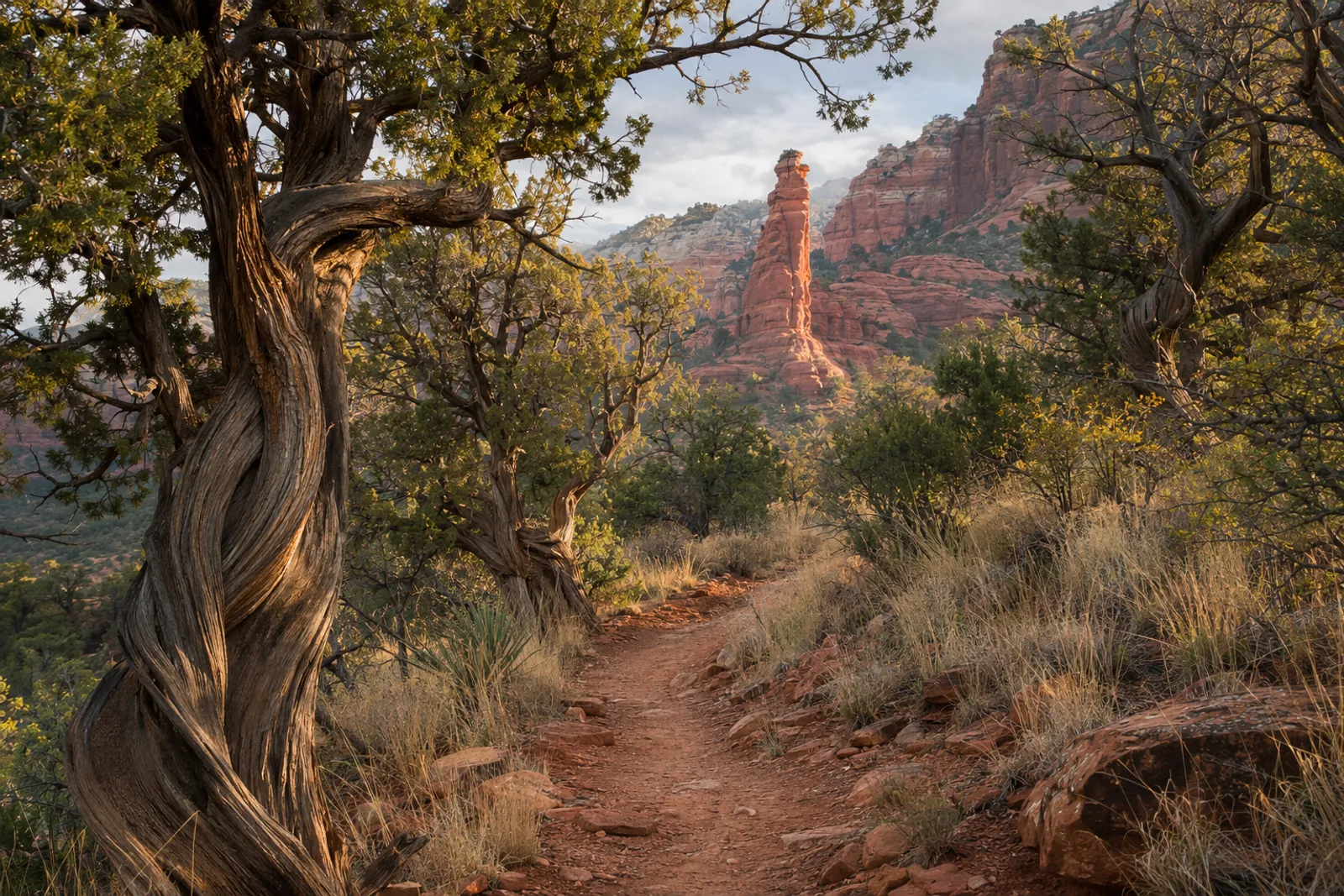
Both energies: masculine at the foot of the Kachina Woman spire, feminine deeper in the canyon.
6 mi out and back with 931 ft of climb. The trail starts next to Enchantment Resort.
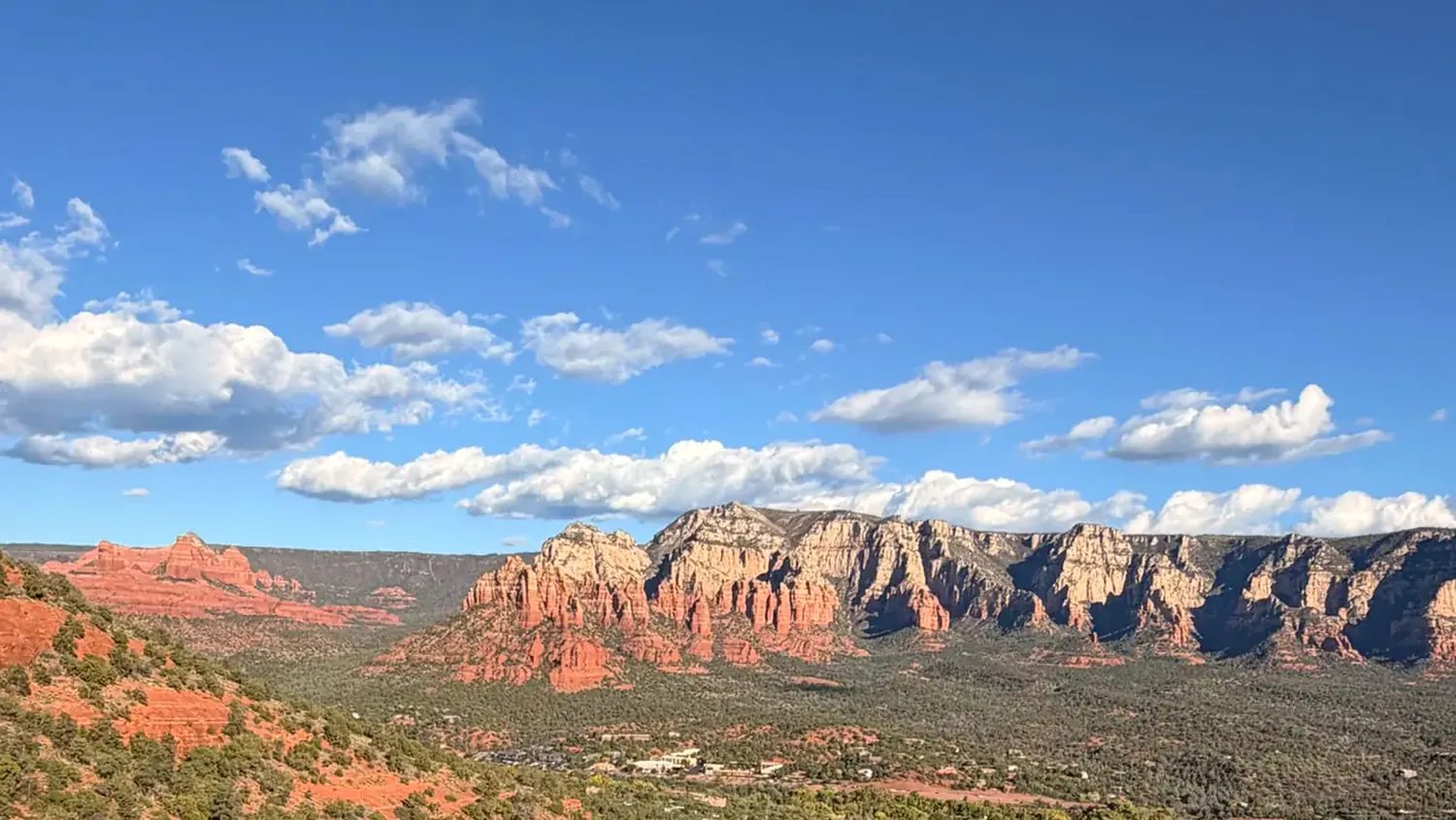
The whole valley below you, and the sunset vortex. Some call its energy masculine, others balanced.
In town on Airport Road. The Airport Loop circles the mesa in 3.3 mi.
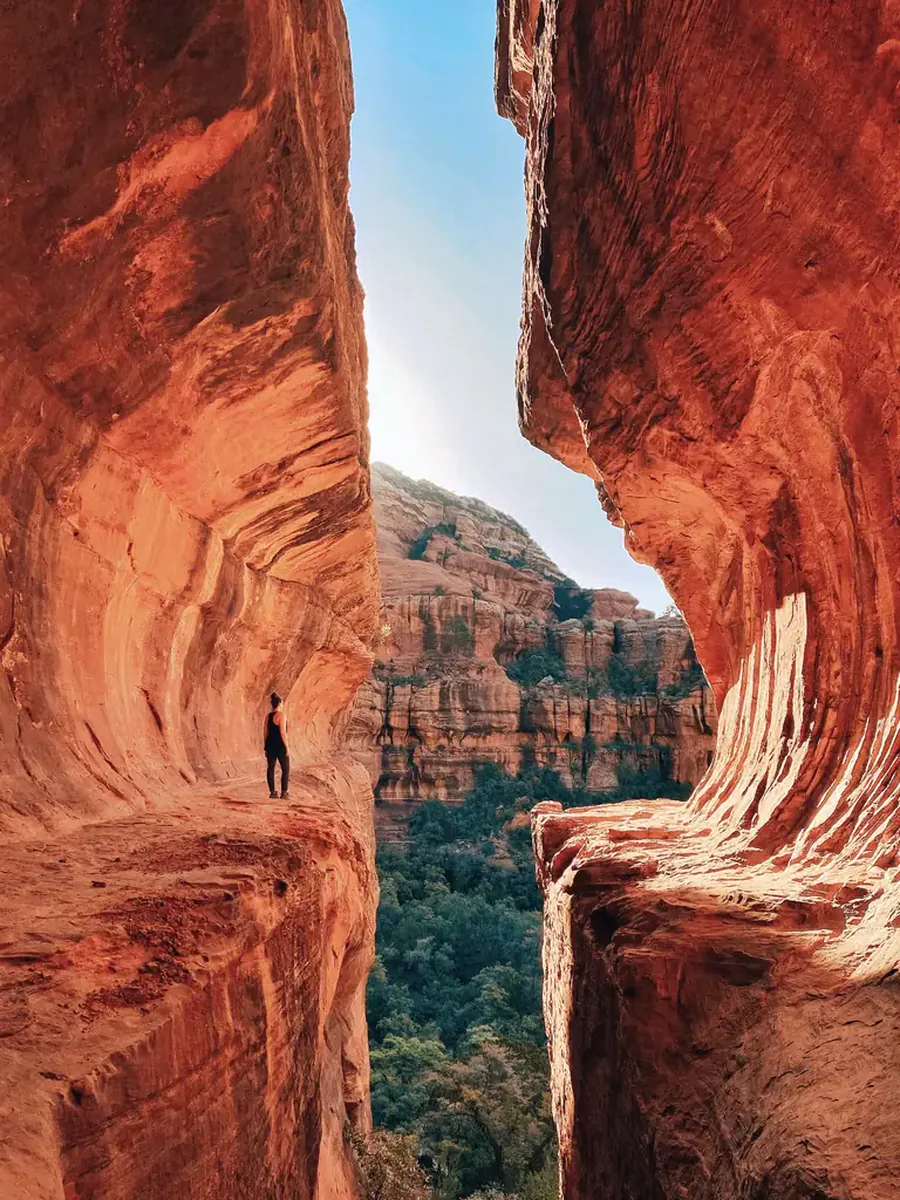
A cave people treat as a womb: you climb in, sit in the half dark and come out new.
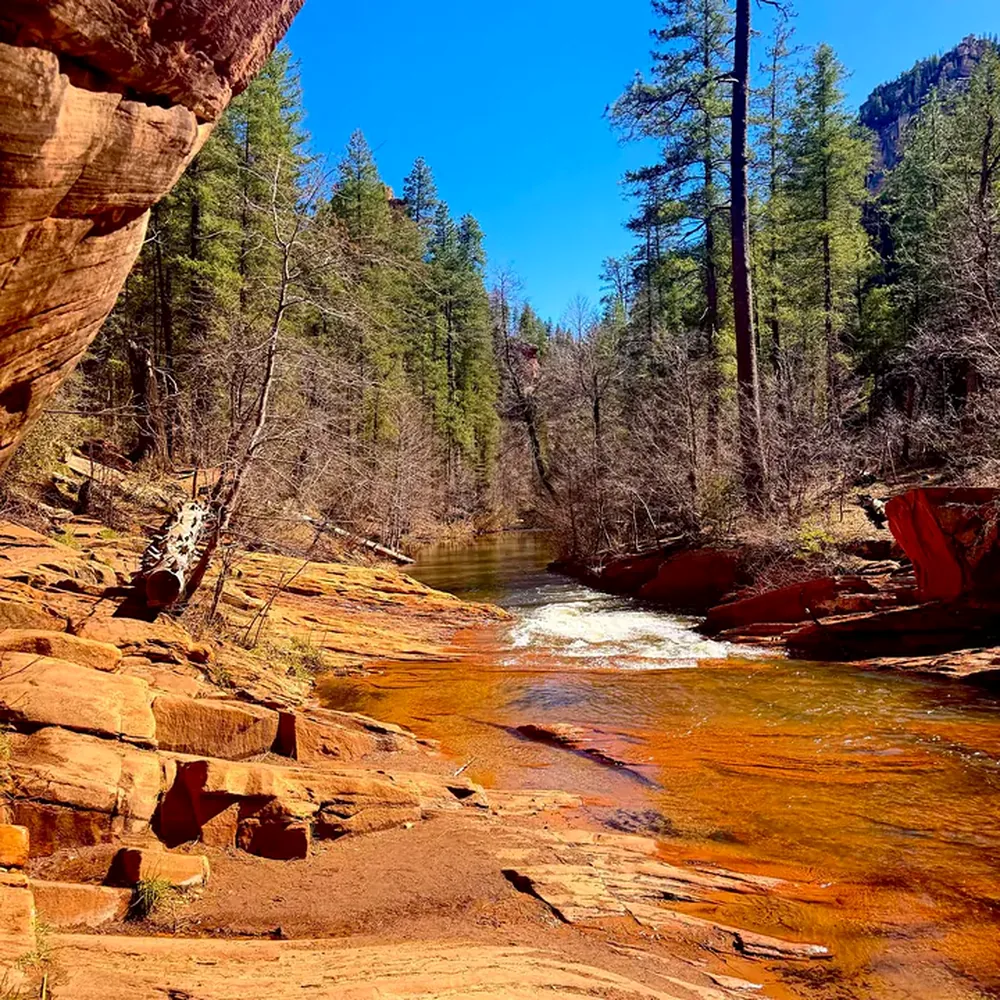
Water and shade under the pines, where we close the route.
Closed after the Pocket Fire until February 28, 2027.
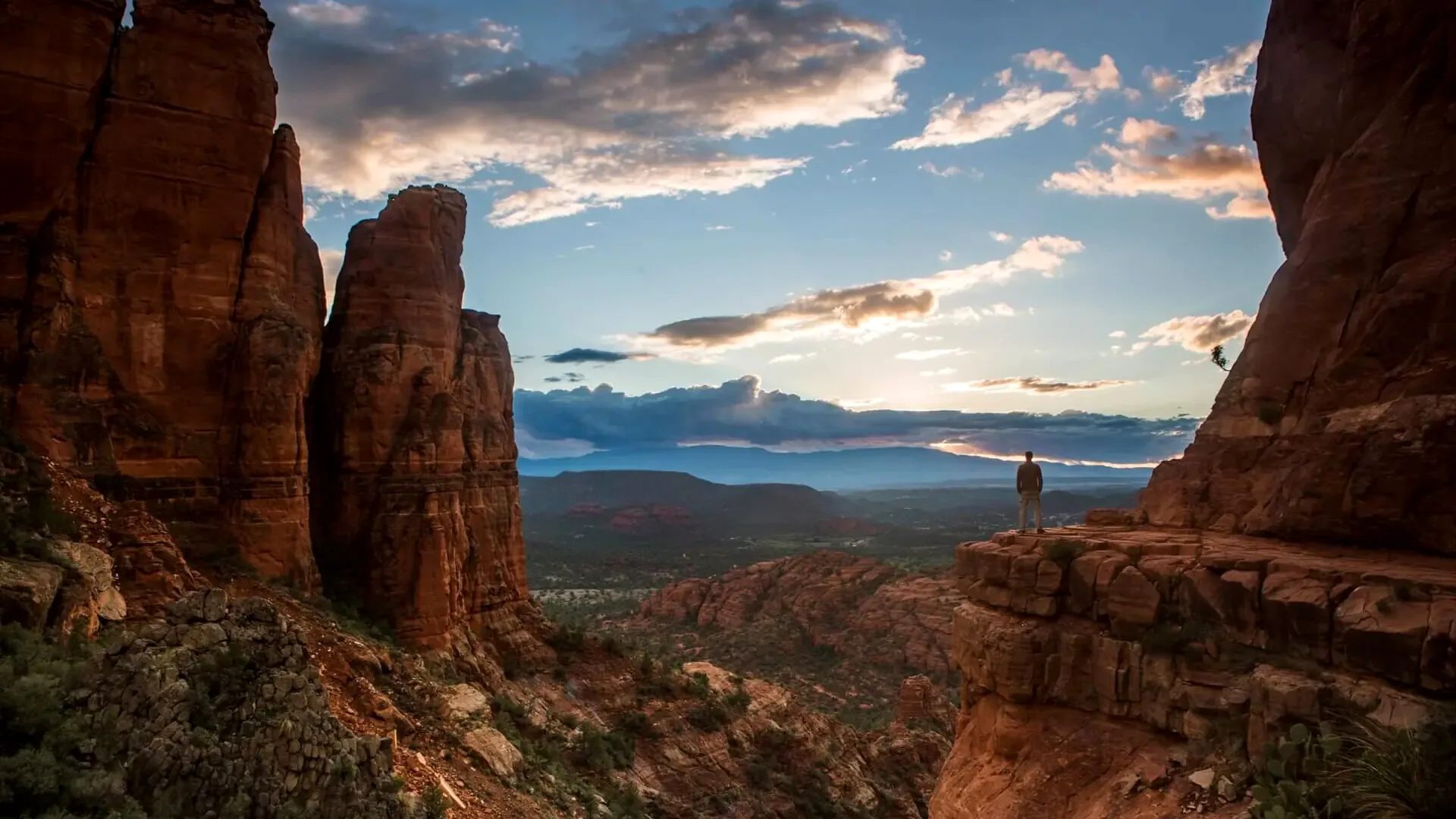
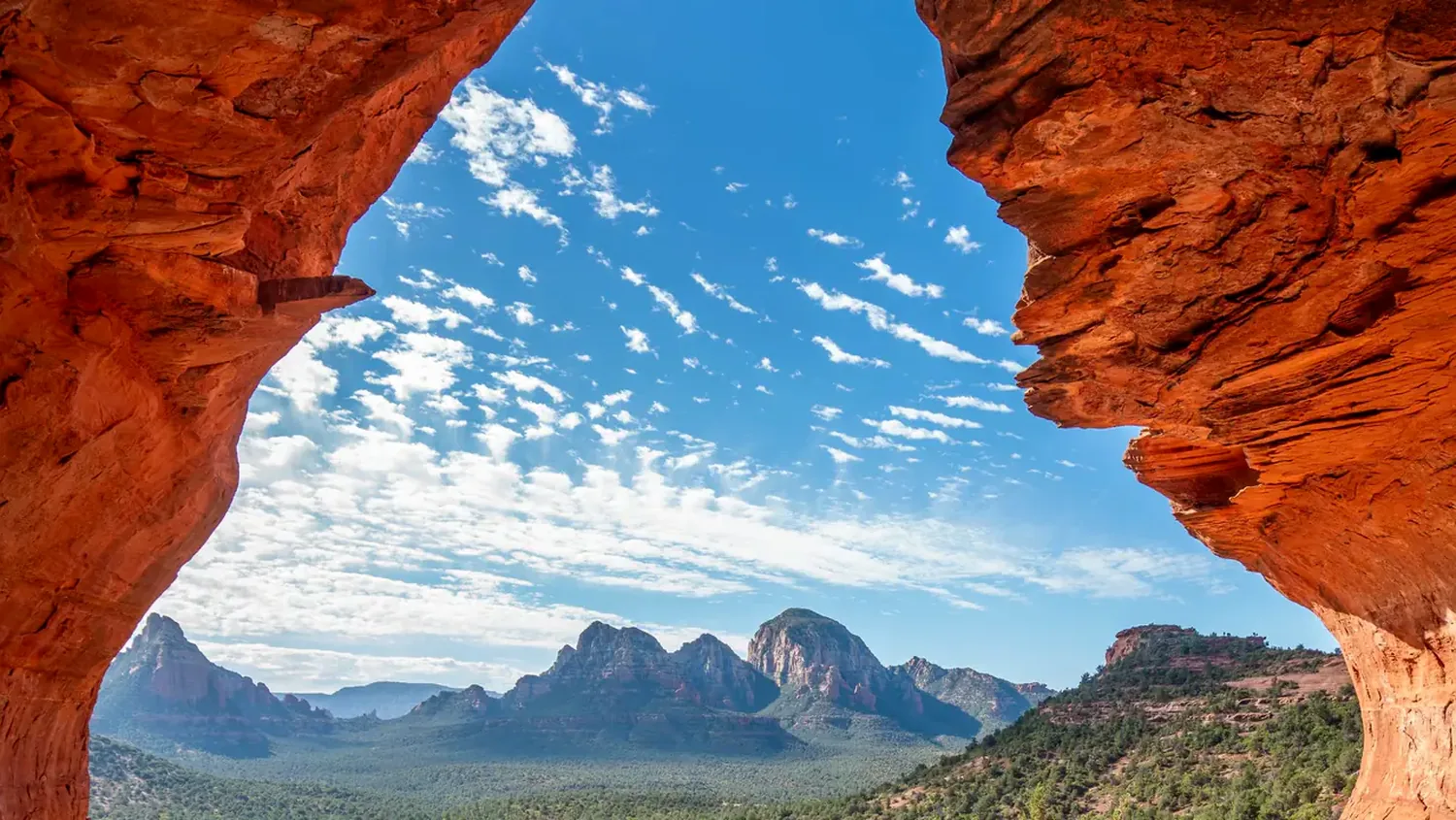
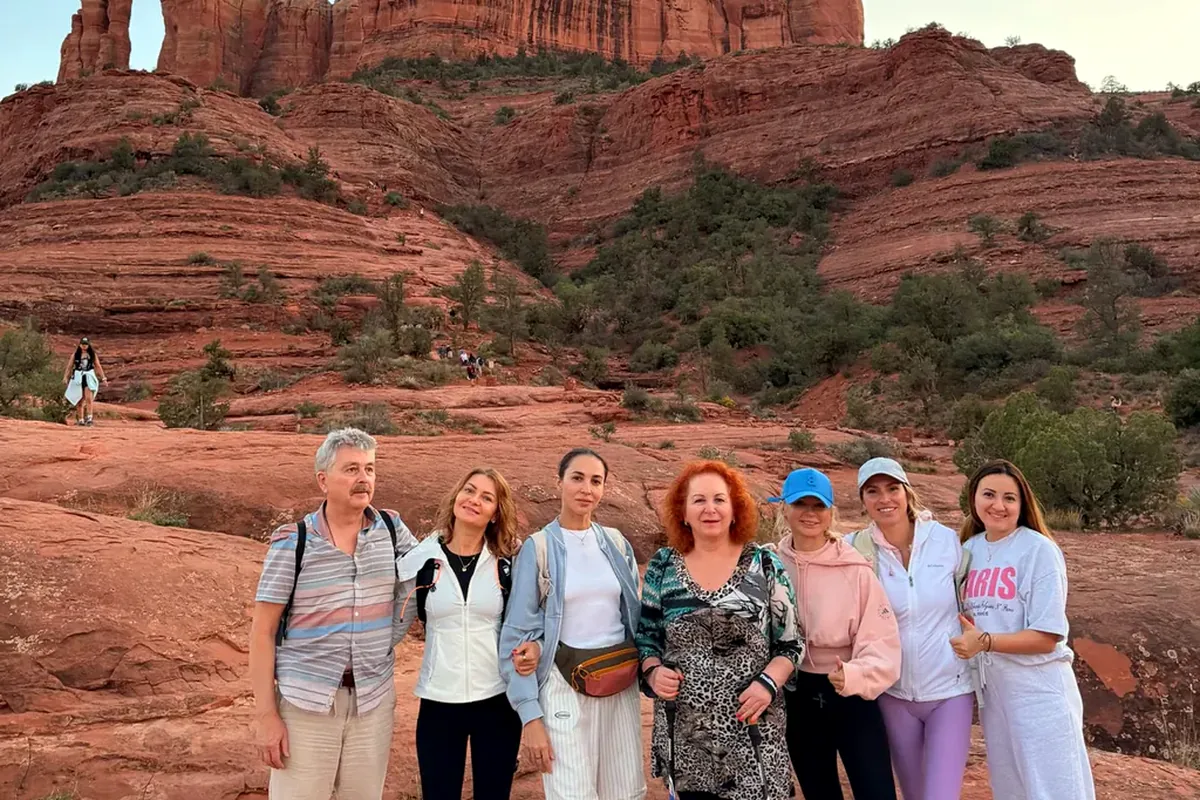
In October 2026 we spent 5 nights in West Sedona with Lexa and went to these places on foot, a theme a day. Day 1, Bell Rock and Cathedral Rock: footing first, then the heart. Day 2, Boynton Canyon and Subway Cave. Day 3, Airport Mesa and the Birthing Cave. Day 4, West Fork and a circle of gratitude by the water.
We don’t come to look. We arrive while the trails are still empty and practise right there, down to a meditation sitting on the rock. Lexa leads the practice, and I curate the week.
Guide
Bell Rock. The Bell Rock Pathway is wide and nearly flat, with 185 ft of climb, and the rock stands right by the trail. Airport Mesa is the closest to town: it sits on Airport Road in Sedona itself.
There is no ranking, and locals won’t give you one. Each place holds its own energy: Cathedral Rock is about the heart, Bell Rock about strength. The one that pulls you is yours.
By the body: the palms grow warm and you want to sit down and close your eyes. Some feel nothing the first time and everything the next morning. Near the vortexes the junipers grow twisted, their trunks wound in a spiral, and locals point to them as the sign.
4 main ones: Bell Rock, Cathedral Rock, Boynton Canyon and Airport Mesa. Local guides add smaller sites and count 7 or even 10, among them Red Rock Crossing and the Birthing Cave.
To park at Bell Rock, Cathedral Rock and Boynton Canyon, yes: $5 a day, $15 a week or $20 a year. If you come on the free Sedona Shuttle, you don’t need one.
Yes, that is how we use them. On our retreat the group reaches the sites early in the morning and meditates there with Lexa. The October 2026 week is on the site day by day.
Guide
The next retreat — Miami, Florida, April 2027.
Curated retreats, practices, and expert gatherings in the United States.