01
What is yoga nidra and why is it done lying down
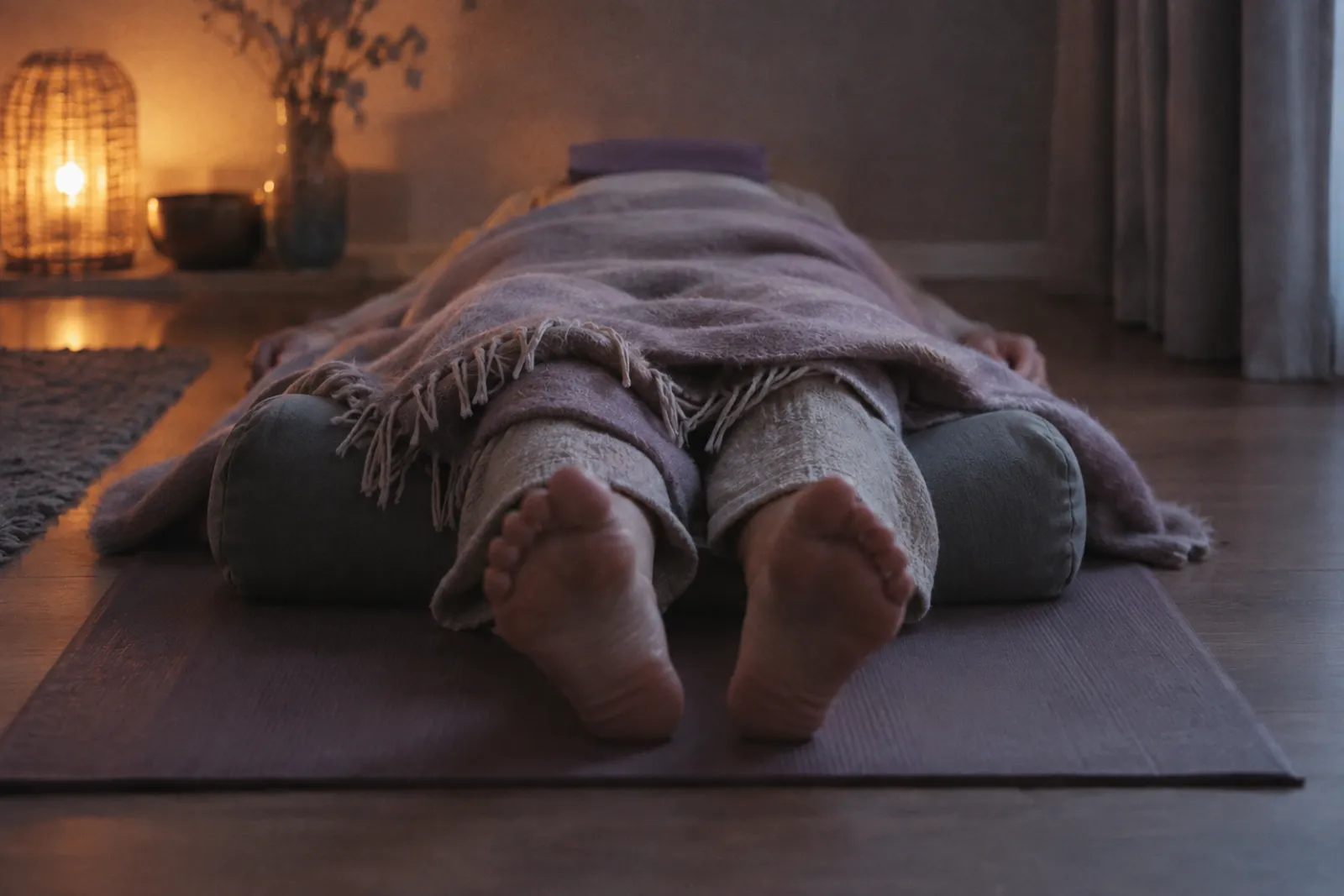
The name translates as yogic sleep, and the state it aims at is a narrow band: body asleep, mind awake. You lie on your back in savasana, covered and warm, and follow a recorded or live voice. Everything else is removed. There is no posture to hold, no breath to control and no effort to maintain attention, which is exactly why it reaches people for whom seated practice is unbearable. The modern form was systematised in the 1960s by Swami Satyananda Saraswati of the Bihar School of Yoga, who built it from tantric sources into a repeatable protocol, and a parallel secular version called integrative restoration has been used with veterans and in clinical settings. The physiological interest is that in a good session brain activity drifts toward the slower rhythms of light sleep while some awareness remains, which is an unusual combination and the reason the practice feels different from both napping and meditating.
02
What happens stage by stage in a full session
A classical session runs through a fixed sequence. First settling: you lie down, adjust until nothing needs changing, and hear the instruction not to move for the rest of the practice. Then an intention, which we cover separately below. Then the rotation of consciousness, the heart of the method: the voice names body parts in a set order, right thumb, second finger, third, palm, wrist, elbow and onward through the whole body, at a pace slightly faster than comfortable. You do not move or tense anything, you simply place attention where the word points. Then awareness of breath, usually counting exhales backwards. Then pairs of opposite sensations, heaviness and lightness, heat and cold, which train the mind to produce and release states on cue. Then a sequence of rapid images, a river, a candle, a road at night, offered without explanation. Then the intention again. Then the slow return, sound of the room, weight of the body, small movements, eyes open.