retreat curatorby milena chernomorets

Readings

Human Design Reading: Two things out of the whole chart

An hour spent on two facts about you beats an hour spent on gates you will never remember.

A human design reading is an hour or two with someone who takes the chart built from your birth date, time and place and shows you how you are built to decide. A competent reader spends almost all of it on your strategy and on your inner authority, the parts you can actually use on an ordinary Tuesday.

Type and authority carry the hourGates are the part you forget
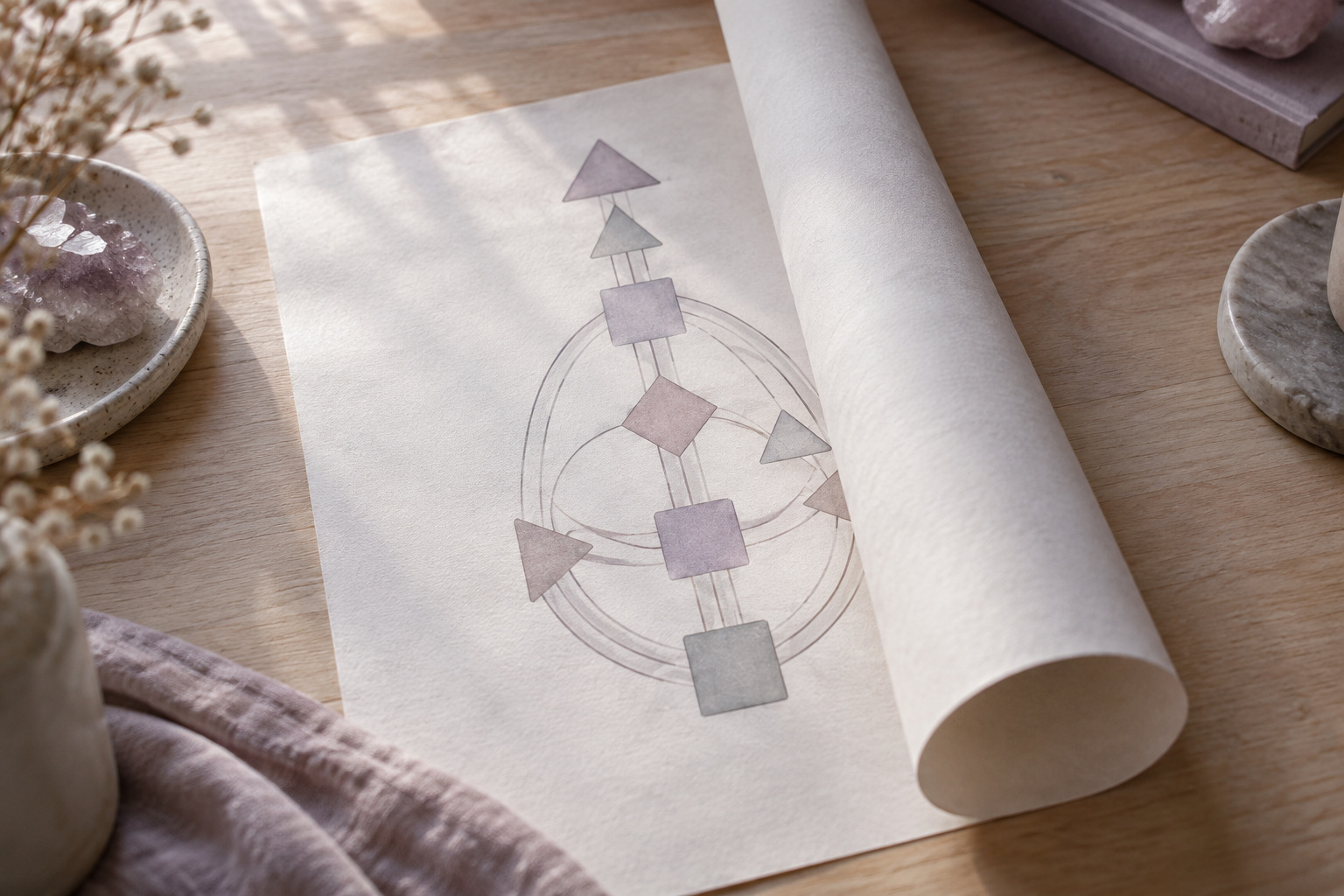
A bodygraph drawn on paper, half rolled, on a light wooden table

01

What is a human design reading and how does it feel different from astrology?

Human design was assembled in the late nineteen eighties by a man who called himself Ra Uru Hu, borrowing the birth chart from astrology, the sixty four hexagrams from the I Ching, the centres from chakra systems and the tree structure from kabbalah. What matters to you as a client is how the hour feels. Astrology tends to hand you a portrait, a set of qualities and tensions you recognise. Human design hands you something closer to operating instructions, a rule about how things should begin for you and a rule about how you should decide them. The language is blunt and mechanical, and plenty of people who bounce off the poetry of astrology stay for exactly that reason.

02

How does a chart reading go step by step?

It starts with your exact birth time, and a reader who does not insist on it is simply being careless, because authority and profile shift with minutes. Then, almost always in this order, your type and its strategy, meaning how things are supposed to begin for you, whether by waiting to respond, waiting for an invitation, informing before you act, or waiting out a full lunar cycle. Then your authority, the bodily signal you are meant to decide by, usually tested live against a real decision you brought with you. Then your profile, then which centres are defined and which are open, with most of the attention on the open ones, since those are where you take on other people. A good reading ends with one experiment, not a syllabus.
Why does a good reader start with two things instead of the whole chart?

Because strategy and authority are the only parts you can test. You can live a week in which you decide nothing on the spot and watch what changes, and then you know something. You cannot test gate forty seven. A first reading that pours nine centres, thirty odd gates and a dozen channels over you produces a pleasant hour and nothing at all on Monday, and the reader knows it, which is why the habit survives mainly among people performing expertise. The traditional advice inside the system is to live with your strategy for months before adding anything else, and that advice happens to be honest consumer guidance too. Depth is a second appointment, if you still want one by then.

What kinds of readings are sold and which one do you actually need?

Four are standard. The foundation reading covers type, strategy, authority and profile, and it is the one almost every newcomer should buy if she buys anything. The deep dive goes through centres, channels and gates, which is genuinely interesting after a year of living the basics and mostly noise before that. The children's reading is aimed at parents and carries the most immediate practical use, because it is really a conversation about how one specific child starts things and recovers afterwards. The partnership reading compares two charts and only works if the other person agreed and is in the room. Career packages exist as well; treat them as coaching with a chart attached and judge the price on those terms.

05

How do you choose a reader and what should make you close the tab?

Ask what the hour covers, whether you get a recording, and whether you will leave with something to try. Ask as well what the person thinks the system is for; someone who answers that it is a language for watching yourself is worth more than someone who calls it the truth about you. Then leave when you hear certain sentences. That your type means you cannot hold a job, or should not have children, or must end your marriage. That your chart explains why your life went wrong and a programme will repair it. That today is the last day at this price. A system of self observation that has started issuing verdicts about your life has stopped being one.

06

What can you do before booking anyone?

Build the chart first. The free human design chart here on this site gives you the same type, strategy, authority, profile and centre layout a reader will open on their own screen, along with a plain explanation of each. Then spend a month on the only experiment that matters. If your strategy is to respond, initiate nothing for four weeks and notice what still reaches you. If it is to wait for an invitation, watch how often you push into rooms nobody asked you into. If your authority is emotional, make no same day decisions. After a month you will either hold your own evidence, which is worth more than any reading, or a question precise enough to be worth an hour of someone's time.

Questions

What people ask before a human design session.

Do I really need my exact birth time?

For the parts worth paying attention to, yes. Type and authority can change within an hour of the time you give, and profile shifts with minutes. If your time is unknown, some readers offer a rectification, but that is an educated guess rather than a fact, and you should hear it described that way before you pay.

Is human design real?

There is no evidence that the chart describes anything measurable about a body, and the system was received rather than researched. What it reliably gives you is vocabulary and permission, a reason to stop forcing things and to notice how you actually decide. Held as a language it is useful. Held as a diagnosis it becomes a cage you paid for.

How much do readers differ from one another?

A great deal, and it comes down mostly to restraint. The same chart in two pairs of hands gives either an hour that ends with one experiment or an hour that ends with a document you never open again. Training exists through several schools and is worth asking about, but the better filter is whether the person asks about your life before describing your chart.

Can a reading tell me what work I should do?

It can describe how you tend to start well and where you tend to burn out, which genuinely helps when you are choosing between two offers. It cannot name a profession, and a reader who names one is improvising. Bring the actual choice in front of you and the hour will give you more than any list of suitable careers.

Where next

Two facts about you are worth more than sixty four gates.

Your type and your authority come out of the free chart here, and they are what a good reader spends the hour on. Live with them for a month and you will know whether the rest of the system is worth paying to hear.

Walk in knowing exactly what you came to ask, and the hour stops being a performance.

Build your free chart

Read here as a language of symbols. Medical, legal and financial questions belong with a professional.