retreat curatorby milena chernomorets

Shadow work

Shadow Work: the parts of yourself you agreed not to be

Shadow work is a set of self-reflection practices built on Carl Jung's idea of the shadow: everything about yourself you learned to hide, deny or disown because it was unwelcome at home, at school or among friends. It is not evil sitting inside you; it is unlived material — anger, need, envy, ambition, even talent. The practice is noticing where it leaks out: sharp reactions, harsh judgement of others, patterns that repeat with new faces. Done gently it widens self-knowledge; done alone over trauma it can flood you.

Jung, then a century of practiceThree methods, one notebook
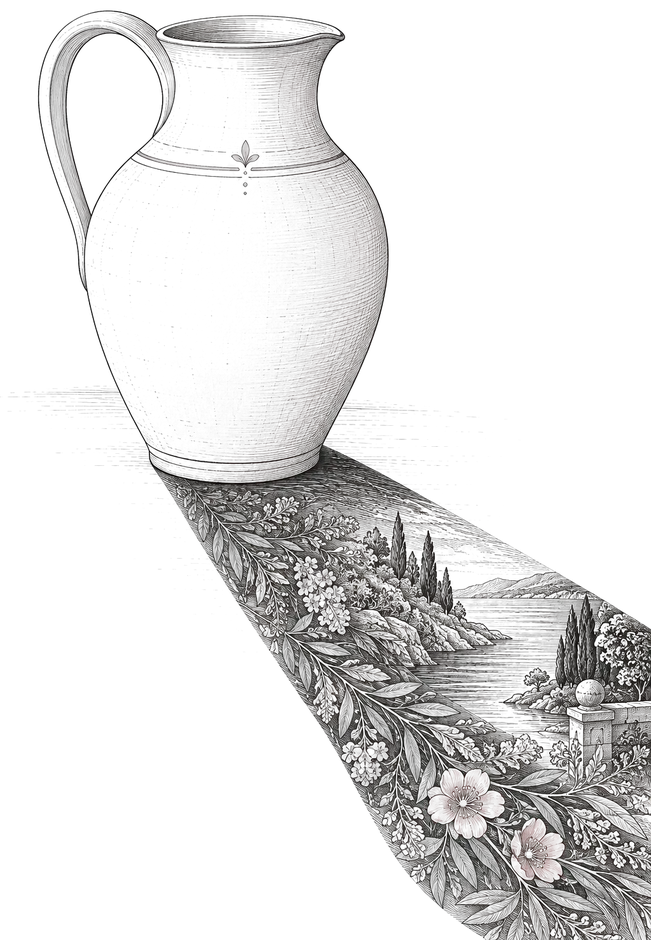
A plain jug and its long shadow, the shadow drawn in more detail than the jug

01

What did Jung actually call the shadow?

Jung used the word shadow for everything a person learned not to be. A child works out quickly which parts of her get love and which get punished, and packs the rest away: anger, neediness, ambition, sexuality, sometimes plain ability. None of it disappears. It keeps running quietly in the background, shaping who irritates you, what you cannot bring yourself to ask for, and which situations you avoid without ever deciding to. The shadow is not evil, it is unlived.

02

How does projection look on an ordinary day?

Projection is the shadow's main exit. Someone talks loudly about her own achievements and you feel contempt out of all proportion. Someone asks plainly for help and you find it pathetic. The intensity is the clue: a mild trait in another person should not occupy your whole evening. When it does, you are usually looking at something you were not allowed to have, and disliking the other person is much cheaper than admitting you wanted it too.

Where do you start: the journal step

Start with a page and a timer rather than a course. Pick one recent moment when your reaction outran the event, set fifteen minutes, and write it out in detail: what happened, what you did, what you wanted to do and did not. No editing, no conclusions, no neat ending. The point is to catch the raw version before the explaining mind tidies it into a story. Two or three sessions a week is plenty; it should feel demanding, never crushing.

Which questions actually move something?

Then work that moment with four questions. What exactly stung, in one sentence? Whose voice in your head says such a reaction is not allowed? What would you have to admit about yourself if the feeling were fair? And what does this part of you want — attention, rest, respect, a refusal, credit? Answers tend to arrive in flat, unflattering language. That plainness is the sign you have got past the story and into the material.

05

Where does the body come into it?

The body reports first. Before a word arrives, notice the grip in the throat, the heat across the chest, the shoulders climbing toward your ears. Name the place, stay with it for a few slow breaths, and let it stay a sensation rather than a verdict about you. Stop if you go numb, shaky or far away: stand up, drink water, look out of a window at something distant. Ending a session on purpose is itself a skill worth practising.

06

Where does shadow work stop and therapy start?

Shadow work is self-reflection, not treatment. It has no diagnosis, no protocol and nobody watching your state while you open something old. For everyday material — envy, irritation, people-pleasing — that is fine. For trauma it is not. Unguided digging can flood a nervous system that has solid reasons for keeping the lid on. If your history holds violence, abuse or a loss you still brace against, do this work with a specialist rather than with a notebook and a forum thread.

An honest boundary

When this belongs with a specialist rather than a practice

Stop and get professional support if the writing brings flashbacks, panic, long numb spells, or a sense of watching yourself from outside; if you cannot return to your day afterwards; if sleep, appetite or work come apart. Go too if what surfaced concerns abuse, violence or a loss you have never told anyone about — a trauma-informed therapist can hold that safely, a journal cannot. If you are thinking about harming yourself, contact emergency services in your country today.

Questions

What people ask before they start.

Can shadow work replace therapy?

No, and it is worth saying that bluntly. A journal has nobody trained watching your reactions and no way to stabilise you if something old opens at speed. Shadow work sits well beside therapy and badly instead of it.

How long before anything changes?

Usually a few weeks of short regular sessions before you catch a pattern live rather than a day later. The first real win is small and specific: noticing the flare mid-sentence and choosing differently once.

What if nothing comes up?

Then the question is too abstract. Swap the theme for a concrete moment from this week — a message that annoyed you, a compliment you deflected, a yes you regretted — and describe it in detail. The material always lives in specifics.

Do I need a teacher, a course or special cards?

No. A notebook and an honest half hour do most of the job. Paid programmes can add structure and rhythm, but be wary of anyone who promises to clear your shadow in a fixed number of sessions.

Is shadow work dangerous?

For most people, done in short doses with a clear ending, it is uncomfortable rather than dangerous. It turns risky when sessions are long and unstructured, when you do them during a crisis, or when they aim straight at trauma without support.

Where next

Reading about it changes nothing. One honest page does.

Sixty three questions are waiting, grouped by nine themes, with the three rules that keep a session from turning into rumination. Take one and leave the rest for another day.

The 63 promptsSpiritual awakeningRetreats with Milena

Read here as a language of symbols. Medical, legal and financial questions belong with a professional.