retreat curatorby milena chernomorets

Awakening

Dark Night of the Soul: The stretch where practice stops working and meaning goes quiet

The dark night of the soul is the classic name for a long, dry period in which everything that used to give comfort, prayer, practice, belief, plans, goes flat and gives nothing back. The term comes from the sixteenth century Spanish mystic John of the Cross, who described it as a stripping rather than a punishment. In everyday terms it feels like emptiness with the lights still on. From the outside it is not reliably distinguishable from clinical depression, and telling them apart is a job for a specialist, not for a reading list.

Named in 1578Not a synonym for depression
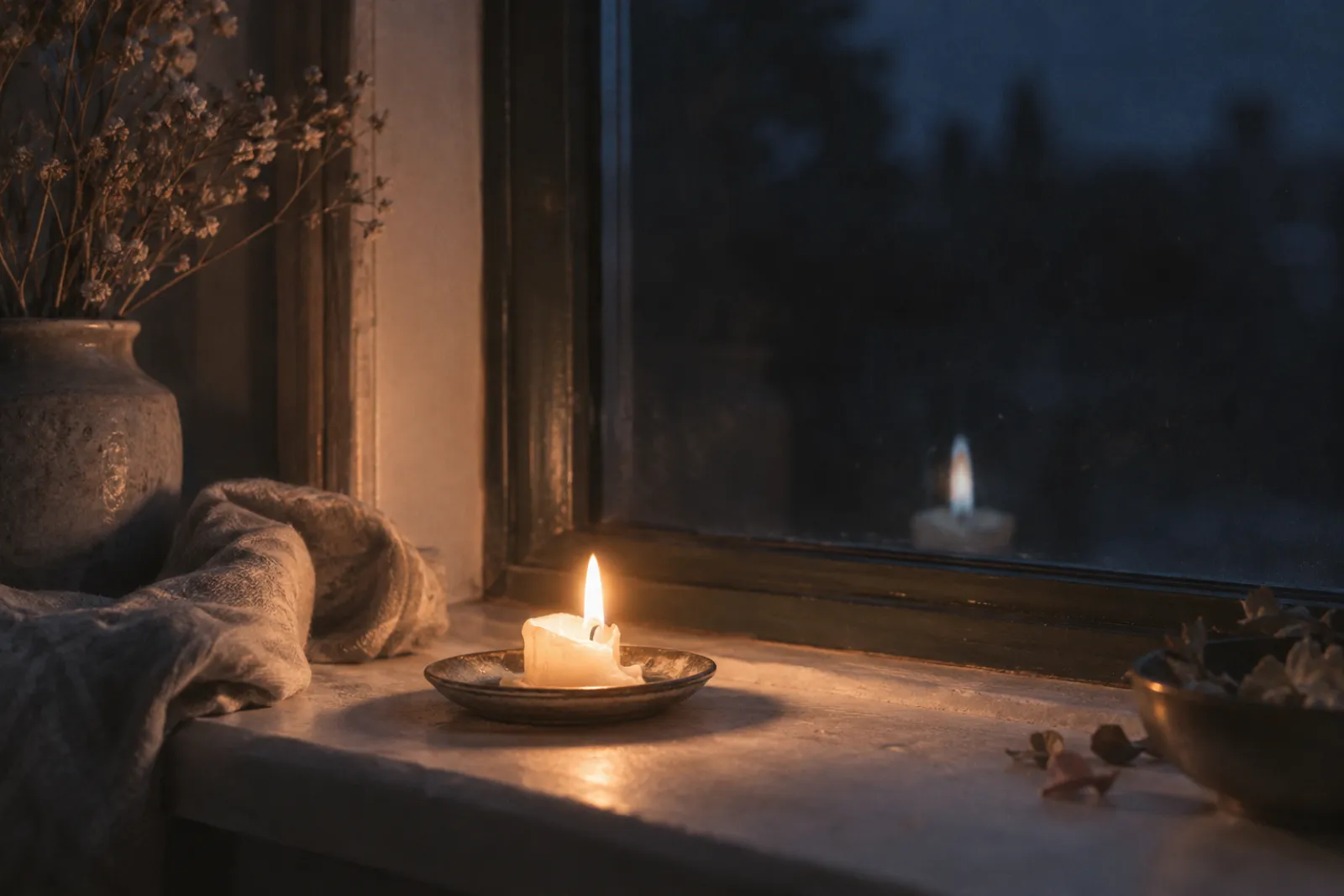
A candle burned almost to its base on a windowsill by a black window

01

Where does the phrase come from?

From a poem and a commentary written by a Carmelite friar imprisoned by his own order. He described two nights, one in which the senses lose their appetite for comfort, and a deeper one in which the mind loses its grip on its own ideas about the divine. His point was counterintuitive. The darkness was not the absence of anything real, it was what growth feels like from the inside when the familiar supports are removed and nothing has replaced them yet.
02

What stages do people describe?

Accounts tend to move through four. A loss of taste, when practices and pleasures that worked stop working. A stripping, when relationships, roles and certainties fall away faster than you can grieve them. A hollow middle, the longest part, where you function outwardly and feel nothing, and where cynicism and shame arrive together. Then a slow thaw, usually noticed in hindsight, when small ordinary things start to have flavour again. The boundaries are blurry and people move back and forth between them.

How long does it last?

Nobody can tell you, and the honest teachers say so plainly. Historic accounts describe months and sometimes years, modern ones the same. The length depends on things that have little to do with spirituality, whether you sleep, whether you are alone, whether there is untreated illness underneath, whether you have work and people who hold your week together. The most useful question is not how long, but what keeps you alive and functioning while it runs its course.

How is it different from depression?

Here is the honest answer. From the outside, and often from the inside, it is not distinguishable. The same flatness, the same sleep damage, the same loss of pleasure and the same self blame. Some describe a difference in attitude, a thread of willingness underneath the emptiness, but that is a feeling and feelings make poor diagnostics. Only a clinician can assess this properly. Treating depression has never removed anyone’s spiritual life, while leaving it untreated has cost people years.

05

How do you live through it without making it worse?

Lower the stakes and keep the structure. Practice becomes short and unimpressive, five minutes done badly beats an hour abandoned. Do not make large decisions about marriage, money or moving while the ground is missing. Tell one person the truth of how bad it is. Keep the body fed, walked and slept as best you can. Expect no insight and no reward, and let the point of each day be that you got through it honestly.

06

How does it end?

Almost never with a revelation. People describe noticing, weeks after the fact, that they laughed at something, or wanted a coffee, or looked forward to a Tuesday. The thaw is undramatic and usually arrives in a mix of things, treatment that was needed, a season changing, one relationship that held. What tends to remain afterwards is less certainty and more patience, a lower opinion of spiritual performance and a much higher regard for people who quietly kept going.

An honest boundary

When this belongs with a specialist rather than a practice

Because this state and clinical depression look the same, the safe default is assessment. See a doctor or a therapist if emptiness, hopelessness or loss of pleasure has lasted more than two weeks, if sleep or appetite has broken, if you cannot work or care for people who depend on you, if the world feels unreal, if you are drinking or using more to get through, or if you have any thought that others would be better off without you. Thoughts of suicide or self harm are an emergency, contact a crisis line or emergency services today and tell someone in the room. No spiritual tradition asks you to endure an untreated illness as proof of sincerity. Getting treated and continuing your practice are not in competition.

Questions

What people ask while they are inside it.

Is this a sign I am doing something wrong?

No. The classic accounts describe it happening to people who were practising carefully and sincerely. The dryness is not a punishment and not a grade. If guilt is a big part of what you feel, that alone is worth bringing to a therapist.

Should I keep meditating if it feels empty?

Usually yes, but shorter and gentler. Long silent sittings can intensify rumination when you are already low. Many people switch to walking, simple breathing or a body practice during this period and return to sitting later.

Can antidepressants interfere with spiritual life?

That is a question for the doctor who knows your history, not for an article. What can be said plainly is that people continue rich practice on medication, and that stopping treatment to prove something has hurt people. Discuss any change with your prescriber rather than a teacher.

Does everyone on a spiritual path go through this?

No. It is a recognised pattern, not a required stage, and treating it as a rite of passage tends to romanticise suffering. Plenty of people practise for decades without this kind of collapse.

Where next

Nothing here speeds it up. Some of it keeps you company.

The material that surfaces in this stretch is usually old and personal, and it answers better to a written question than to another explanation. If you want the wider map again, the awakening page holds it.

Shadow workSigns and stagesBack to awakening

Read here as a language of symbols. Medical, legal and financial questions belong with a professional.