retreat curatorby milena chernomorets

Retreats

Couples Retreats: Four days will not fix a marriage

What four days away can start, even when they cannot finish it.

A couples retreat is a few days set up so the two of you finally talk about the thing you never reach at home. Formats run from a weekend workshop with other pairs to a private stay with one facilitator. It works when you both still want each other and cannot climb out of a groove you can already name. Where there is fear or violence, a licensed therapist is the right door.

Not couples therapyWhen it is the wrong tool
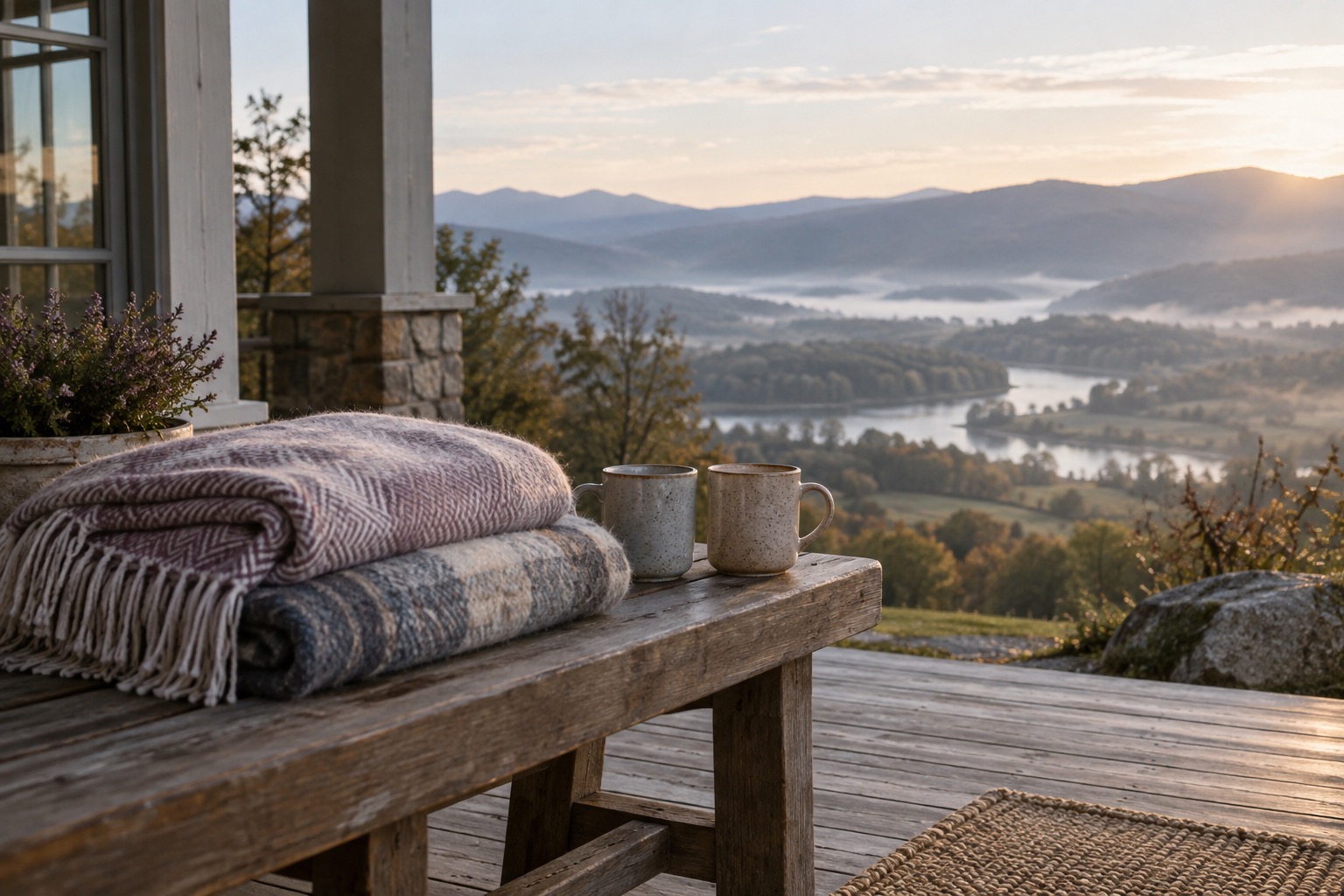
Two mugs and two folded blankets on a porch bench facing a valley, morning.

01

What is a couples retreat, and what forms does it come in?

It is time spent on the relationship instead of around it. Four shapes dominate. The weekend workshop runs a curriculum, usually grown out of one school of couples therapy, with other pairs in the room, exercises done knee to knee, and a facilitator at the front. The small-group intensive is longer and slower, fewer couples, real pauses between sessions, and a willingness to work one pair's mess in front of everyone else. The private retreat puts the two of you and one facilitator in a house for several days with nowhere to hide, which makes it the most demanding format and usually the costliest. Then there is the loose wellness trip, yoga in the morning, a bit of shared breathwork, long free afternoons, marketed to couples but not actually built around the relationship. All four get called retreats. Only the first three are doing the work. And if you came here hunting the 2009 comedy with the same name, that one has better beaches and worse advice.

02

When does going away together actually help?

Retreats do their best work when you both still want the thing and cannot reach it from inside an ordinary week. The flattened conversation is the classic case, where you are kind to each other, you coordinate school runs and dentist appointments, and neither of you has said anything real since spring. So is the pattern you can both describe in one sentence and neither of you can stop once it starts, the one where she goes quiet and he explains harder, or the reverse. Transitions bring people too, a baby who rearranged the whole house, a move, a parent dying, a job that quietly ate one of you. And then there are the couples who come while things are fine, because fine is easier to build on than broken. That last group usually gets the most out of the days, which is unfair and also true.

When is a retreat the wrong tool entirely?

Some situations need a clinician and a closed door, not a group and a view. If an affair came out three weeks ago and the ground is still moving under both of you, a retreat will either force a performance in front of strangers or detonate the weekend. If one of you is drinking through it, the substance runs the days and nothing lands. If you are afraid of your partner, if there has been violence of any kind, if you check his face before you answer a simple question, a shared retreat is not safe, because it puts you in a closed setting with fewer exits and no one on call at two in the morning. And if one partner was talked into coming, the whole thing curdles, because the facilitator spends the days negotiating consent instead of working. None of this is a moral failure. It is a question of which door you go through first.

How do you choose between all of them?

Start with who is leading. Ask what their training actually is, in plain words, not a bio stuffed with modality names. A licensed couples therapist, a long apprenticeship inside a named tradition, and a weekend certificate bought online are all sold with the same confidence. Then ask how much of the work happens in front of other people, because some retreats put your specific argument on the floor in front of the whole group and some never do, and you want to know which one you booked. Ask for a real day, hour by hour, not a sample. Ask what happens after you go home, since the drive back is where most of it either sets or evaporates, and one follow-up call six weeks out is worth more than an extra day on site. Cost varies far too widely to answer here, so read the page on what a retreat costs before you compare two options.

Where to go

Places that take couples as couples

Real places that run this themselves, on their own ground, with their own dates and programs.

Mii amo

Sedona, Arizona

Destination spa inside Boynton Canyon selling fixed-length all-inclusive wellness journeys.

WellnessCouples

their site

Miraval Arizona Resort & Spa

Tucson, Arizona

All-inclusive wellness resort in the Catalina Foothills with mindfulness, equine and spa programming.

WellnessCouplesYoga

their site

Canyon Ranch Tucson

Tucson, Arizona

Wellness resort combining medical consultations, fitness and spa services on one desert campus.

WellnessCouples

their site

CIVANA Wellness Resort & Spa

Carefree, Arizona

Wellness resort north of Scottsdale where a daily schedule of classes is included in the stay.

WellnessYogaCouples

their site

Miraval Austin Resort & Spa

Austin, Texas

All-inclusive wellness resort on Lake Travis with mindfulness, equine and spa programming.

WellnessCouplesYoga

their site

Lumeria Maui

Makawao, Hawaii

Restored plantation estate in upcountry Maui hosting yoga and educational retreats.

WellnessYogaCouples

their site

COMO Shambhala Estate

Bali, Indonesia

Residential health retreat above the Ayung river gorge, with resident wellness practitioners.

WellnessYogaCouples

their site

Rancho La Puerta

Tecate, Mexico

Destination spa in Baja California operating since 1940, with week-long all-inclusive stays.

WellnessYogaCouples

their site

The whole directory

05

What will the shared room and the quiet actually feel like?

Nobody warns you about the logistics of intimacy on a retreat. You will probably share a room, often a bed, and you will do it on the evening of a day when one of you cried in front of a room of strangers. There is no going home to separate corners of the flat. Some couples find that the enforced closeness is the whole medicine. Others need a plan, a walk taken alone after the hard session, an agreement that the room is not where the argument continues. Silence is the other surprise. Programmes often hold quiet stretches, at breakfast or after dark, and a couple used to filling every gap can find twenty wordless minutes harder than any exercise. Ask in advance whether silence is part of it. Ask whether separate rooms are possible if you want them, and do not read wanting them as a bad sign about you.

06

What can four days not do?

Four days will not rebuild trust that took four years to spend. They will not make someone want a child, or stop wanting one. They will not decide whether you stay. What a retreat can do is smaller than that and more useful. You get to see the pattern from outside, with a name attached, which is the difference between drowning and watching yourself drown. You get several hours of the kind of attention neither of you has given the other since the wedding, if there was a wedding. You leave with two or three specific moves rather than insights, moves being the part that survives the motorway. Then you go home, where the dishwasher still needs emptying and nobody is facilitating anything, and whether it holds depends almost entirely on the month that follows. Retreats that promise more than this are selling an ending instead of a beginning.

An honest boundary

When this belongs with a specialist rather than a practice

If you are afraid of your partner, even slightly, even in a way you have learned to explain away, a retreat is not the setting for that. The same goes for any violence or intimidation, and for control that shows up as monitoring your phone, money held back, or friends who quietly disappeared. If either of you is dependent on alcohol or anything else, or carrying depression that has never been treated, those will run the days and the relationship work will not land. And a retreat is not the place to tell your partner about an affair for the first time, in a house full of people you met on Friday, with no clinician awake at midnight. Every one of these has a proper door. It is a licensed couples therapist, an individual therapist, or, where there is fear, a domestic violence service you can call on your own. Choosing that instead is not a failure. It is the same work, done somewhere it can actually be held.

Questions

What couples ask first.

Can a couples retreat save a marriage that is already in trouble?

Sometimes, and rarely by itself. A retreat is good at showing you the loop you are stuck in and giving you a few days of attention you cannot buy in an hourly session. What it cannot do is replace the months of ordinary repair that follow. Couples who come away better are usually the ones who had something left to work with and who kept going afterwards, with a therapist or with each other. Treat the days as a start, not a verdict.

Do we have to talk about our problems in front of other couples?

It depends entirely on the format, so ask before you pay. Some workshops keep all the intimate work inside your own pair, with the facilitator circulating and the group only used for teaching. Others are built on live work in front of the group, where one couple sits in the middle and everyone watches. Both can be good. Neither is for everyone. If the idea of an audience makes you physically tense, settle that before you pay and either choose a pair-based programme or go private.

Is a private retreat better than a group one?

It is more intense, more tailored and harder to hide inside, which is better for some couples and too much for others. A group gives you something private work cannot, the plain relief of hearing other pairs describe your argument almost word for word. A private retreat gives you a facilitator's full attention and no need to perform for anyone. If one of you is very private, or if the problem is unusual and specific, private tends to win. Otherwise the group is often enough.

What if only one of us wants to go?

Then do not book it yet. A partner who arrives under pressure spends the whole time defending the fact that he did not choose this, and the facilitator ends up working on the coming rather than on the relationship. Find out what the reluctance is actually about. Often it is not the retreat, it is fear of being outnumbered, or of being told he is the problem for four days straight. A single session with a couples therapist first, or a shorter and less confronting format, usually moves this further than persuasion.

Where next

Four days will not do the work. They can start it.

If a place is worth the trip, its own site will say who leads, how the days run and what happens when a conversation goes badly. The directory sends you straight there, and the cost page explains what moves the figure.

A week after which the thing that would not move for years has finally moved.

Go on a retreat with Milena

Read here as a language of symbols. Medical, legal and financial questions belong with a professional.