retreat curatorby milena chernomorets

Readings

Energy Healing Sessions: What the hour can honestly do

The hour is real, the attention is real, and the claim on the sign is the part to check.

Energy healing is an umbrella over reiki and a long tail of branded methods, and under every name the hour has the same shape. You lie still and fully clothed while a practitioner holds their hands over you, and you leave calmer and warmer. Buy the hour for that, and listen to what they claim it cures.

One hour under many brand namesNever instead of treatment

An hour of calm attention is not a treatment. Nothing on this page replaces a doctor, and a practitioner who tells you to stop your medication is telling you to put yourself in danger.

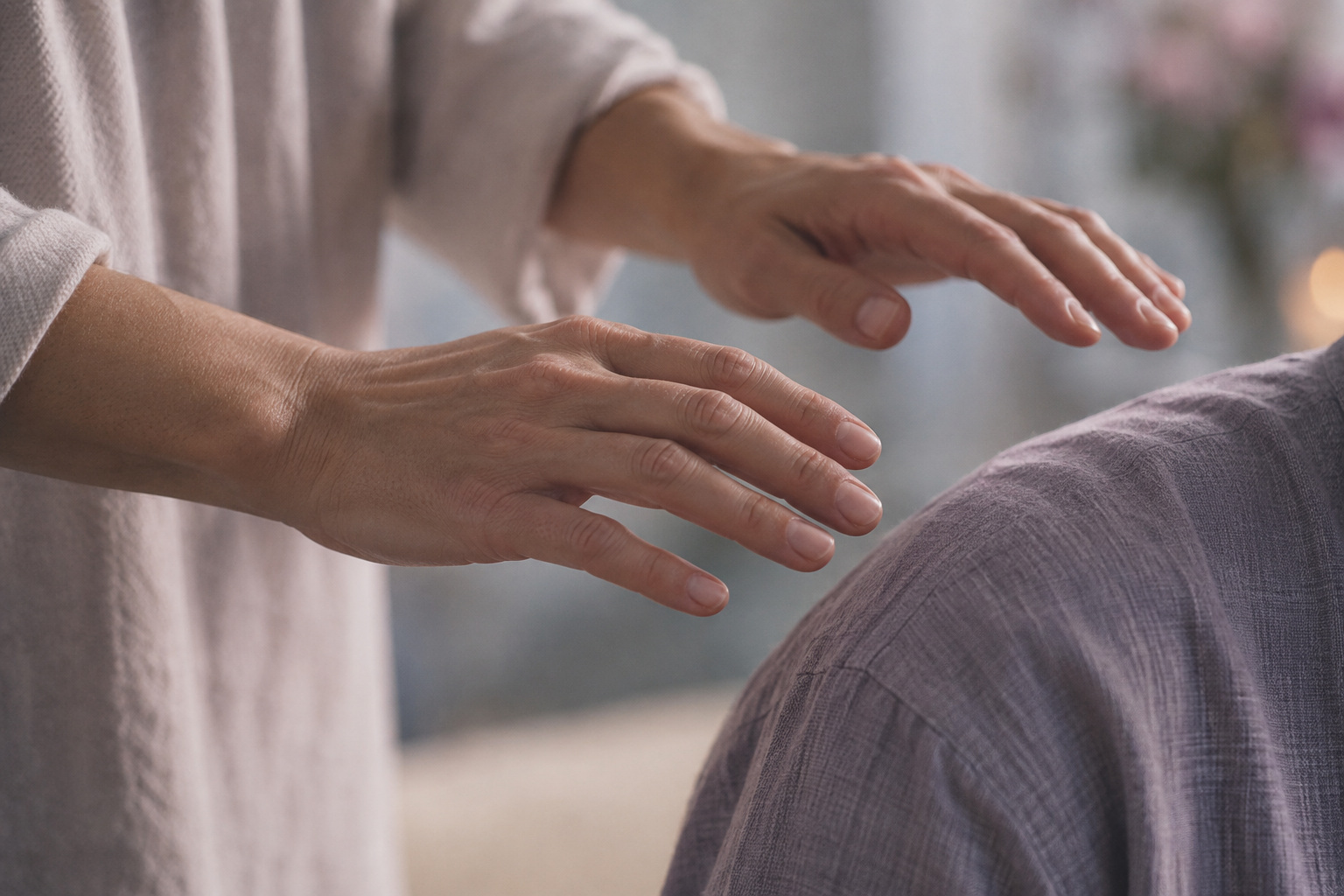
Two hands held just above a shoulder covered in grey linen, close crop, no face

01

What is actually under the energy healing umbrella?

Reiki is the most widely known and comes with a lineage, a set of hand positions and levels of attunement. Chakra balancing works with the seven centre model from Indian tradition and usually adds sound, stones or breath. Healing touch and therapeutic touch grew up inside nursing in North America and are still taught to nurses in some hospitals, which gives them a clinical veneer the evidence does not fully support. Then come distance sessions, where none of it happens in the same room, and a long list of named methods each with a founder and a certification path. Beneath the branding the hour is largely the same everywhere, and so is the claim: that a life force can be directed, and that your body responds. What varies most is not the method but the person.
02

What happens in the hour, and what is known about it?

You lie on a padded table fully clothed under a blanket, the light is low, there is quiet music or nothing at all. The practitioner works through a sequence, resting hands lightly on you or just above, and barely speaks. People report heat, tingling, heaviness, twitching legs, sudden sleep and tears with no story attached, and a fair number feel almost nothing. All of that is what an hour of stillness, warmth and another human being's complete attention does to a nervous system that has been running without any of it. Where the research lands is narrow and specific. Modest reductions in anxiety and in self reported pain do show up, and they track with relaxation and expectation rather than with whose hands were there, because trials cannot reliably tell trained practitioners from untrained people mimicking them.

How do you check a practitioner before you pay?

Ask what training they did, how long it took and who taught them, and listen for a straight answer rather than a lineage recited like a pedigree. Ask what else they do, because someone who also works as a massage therapist, a nurse or a yoga teacher usually has a steadier sense of where their work stops. Then listen to how the offer is phrased. There is a real difference between a practitioner who says they hold space, that people often leave calmer and that some feel heat, and one who says they will clear the blockage causing your condition. Only the first is defensible. Ask directly what they tell a client who is under a doctor's care, and the only acceptable answer contains the words keep seeing your doctor. Finally, check whether they are selling a session or a course.

Which red flags end the conversation?

One ends it immediately: any suggestion that you cancel, delay or reduce medical treatment, including the softer versions, that the chemotherapy is interfering with the work or that the medication is blocking your field. That is where a pleasant hour becomes dangerous, and people have died of it. Close behind is diagnosis by energy, a practitioner naming the affected organ or the illness forming in you. Then the fear structures: the curse, the evil eye, the damage sitting on your family line, all of which arrive with the remedy already for sale. Prepaid packages bought before a first session belong here too, as does pressure to rebook while you are still on the table, soft and open and least able to say no. A practitioner who says only what they have the standing to say does none of this.

05

What about distance sessions?

A distance session means the practitioner works at an agreed time while you lie down at home, and you receive a written or spoken account afterwards. Practitioners explain it by saying the energy is not local, so proximity is irrelevant. It is worth noticing what this removes. The warm room, the hands, the table, the silence held by someone else and the hour you could not walk out of, which is to say nearly everything that made the in person version worth having. What is left on your side is an hour you set aside to lie still, which is genuinely something, and on their side a report you cannot connect to anything. Price it accordingly, and be especially careful here, because distance work is where the fear based offers concentrate.

06

Where does this fit, and where do you read further?

The sensible place for a session is alongside your life rather than instead of something in it. If you are exhausted, over extended, grieving, or simply never still, an hour of warm attention from a person you trust is a reasonable thing to buy, much as a massage is. It is not a treatment, not a second opinion, and not a reason to skip an appointment. The energy healing section here on this site covers the umbrella in more detail, with separate pages on reiki, on cord cutting and on clearing a space, each doing the same accounting of what the practice claims and what is actually known. Read whichever one you were about to book, then decide with your eyes open.

Questions

What people ask about energy work before paying for it.

Does insurance cover energy healing?

Almost never as a medical service. Some hospital programmes offer reiki or healing touch to inpatients free as part of comfort care, and some wellness benefits reimburse a session the way they reimburse a gym membership. Anyone telling you it is a covered treatment is describing something else. Ask the plan rather than the practitioner.

How many sessions do I need?

Nobody can tell you, because no protocol exists and no research supports one. The number you are quoted is a business decision rather than a clinical one. Book a single session, notice what the week after it is like, and decide from there. If the answer you get is that the work will not hold without a course, you have learned something about the seller.

Is it safe during pregnancy or cancer treatment?

Lying still while someone rests their hands on you is physically harmless in both cases, and many cancer centres offer exactly that for comfort. The danger is never the hour itself, it is what gets said during it. Tell your medical team what you are doing, and treat any advice about your treatment coming from a practitioner as a reason to stop seeing them.

What if I feel nothing at all?

Then you lay still for an hour, which was never worthless. Some people simply do not respond to touch based relaxation, some arrive too wound up to drop, and some spend the whole hour narrating it to themselves. None of that is a blockage or a closed heart, whatever you are told afterwards. If a second session goes the same way, the format is not for you.

Where next

The same hour, without a bill and without a brand.

Slow breath, a warm room, hands where the tension sits and nowhere to be for sixty minutes. The free page walks it through step by step, which also makes it much easier to judge what a paid session added.

Walk in knowing exactly what you came to ask, and the hour stops being a performance.

Do it free at home

Read here as a language of symbols. Medical, legal and financial questions belong with a professional.