Desert Rose: Meaning, Properties and How to Use It
Desert rose is treated as a household guardian — the stone kept by a door or on a shelf to hold a calm boundary. Traditions also link its slow formation to patience and to purposes that take years. Each rosette is said to have its own spirit in North African folk telling.
What tradition says
What is Desert Rose known for?
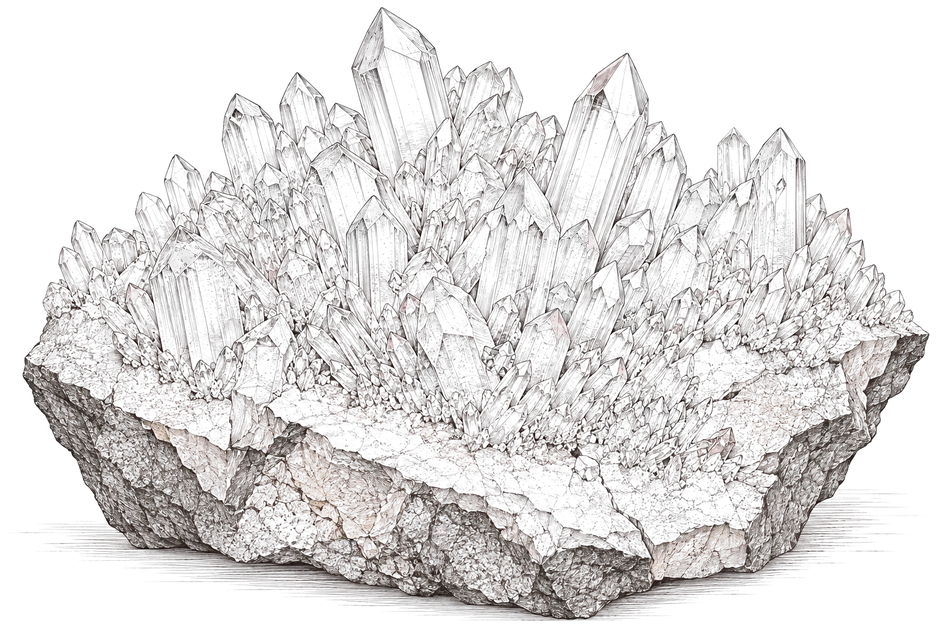
These rosettes form where gypsum or barite crystallises in sandy desert soil, trapping grains between the blades — Tunisia, Morocco, Mexico and the American Southwest all produce them. They were sold to travellers long before they were sold to seekers. Crystal practice gave them a home-guardian role and a second one as patience stones, on the reasoning that something shaped by evaporation over centuries cannot be hurried.
The practice
How do you use Desert Rose?
Put one where the household actually crosses a threshold: an entry table, a windowsill, the shelf by the keys.
Traditional use is to name what the home is for when you set it down, and then leave it undisturbed.
Dust it with a dry brush; moving it around constantly is not part of the practice.

Read here as a language of symbols. Medical, legal and financial questions belong with a professional.
Two more
What does Desert Rose pair with?
Stones are kept in small sets rather than alone, and these two are the usual company for this one.
What it is kept for
What do people reach for Desert Rose for?
The same stone, read through the thing you came here with.
Questions
What else do people ask about Desert Rose?
My desert rose is crumbling. Why?
Moisture, almost certainly — a bathroom shelf, a kitchen windowsill, a damp cellar. Gypsum takes up water and loses its grip on the sand grains. Move it somewhere dry and handle it by the base.
Is desert rose the same as selenite?
Often yes: gypsum in a rosette habit instead of blades. Some roses are barite instead. Either way the care is identical — dry storage, no water, gentle handling.
Next in the library
The stones beside this one.
Two ways on
One stone is a reminder, a library is a map.
A hundred and four stones and sixty four everyday uses, sorted the way a week arrives. If you came here through the body rather than the mineral, the seven chakras are the other way in.
- 104
- stones, each with what tradition says
- 64
- everyday uses, six stones under each
- 7
- centres, the same set read through the body