Selenite: Meaning, Properties and How to Use It
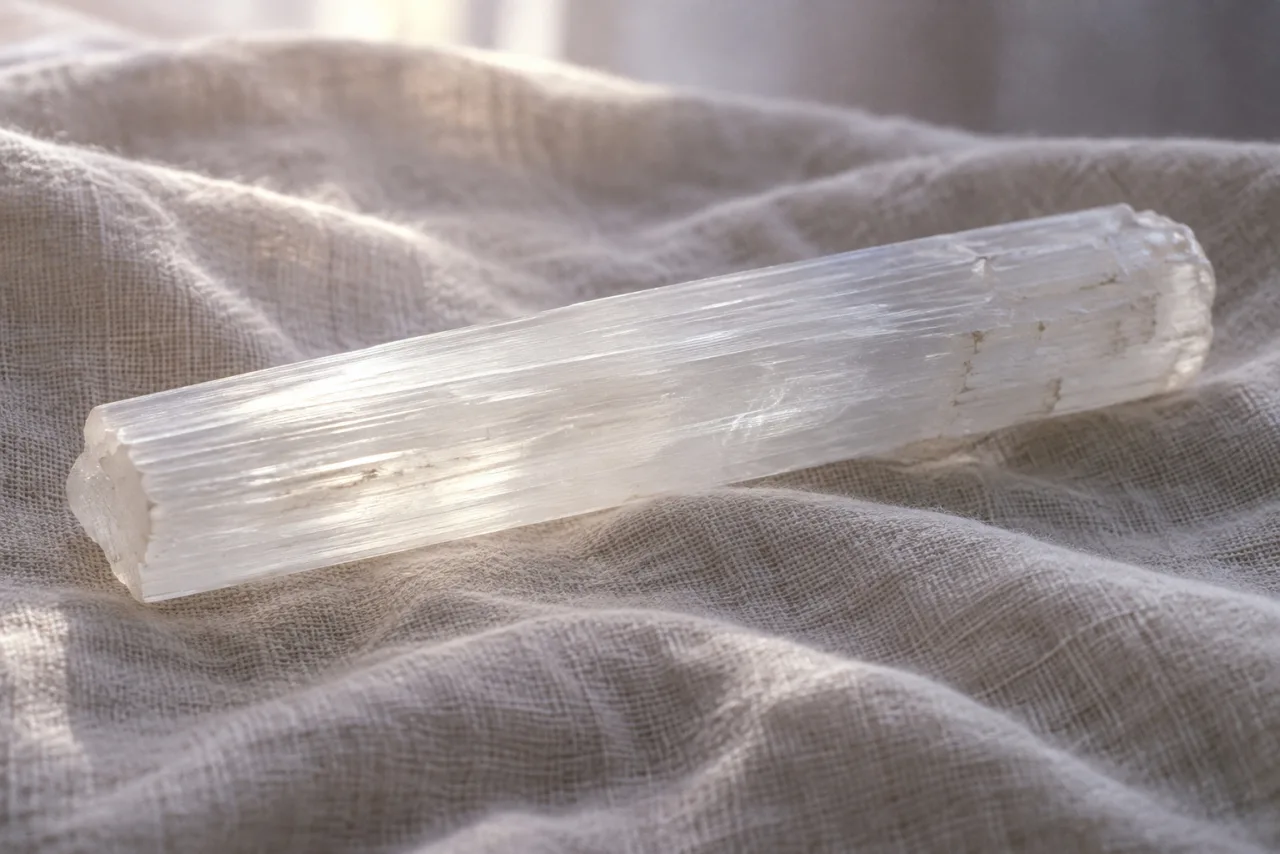
Selenite is the cleansing stone of modern practice, the one people use on other stones. Tradition credits it with clearing a room and a head of whatever has settled there, and with a calm that feels like light rather than weight. Its name comes from Selene, the Greek moon.
What tradition says
What is Selenite known for?
Selenite is gypsum, the same mineral as plaster, grown into satin bars and fibrous towers. Cathedral windows were glazed with sheets of it before glass was cheap, which is where the sense of translucent light comes from. Modern practice made it the housekeeper of a collection, a plate or bar that other stones rest on overnight. Writers describe it as having no heaviness at all, a stone that clears rather than gives.
The practice
How do you use Selenite?
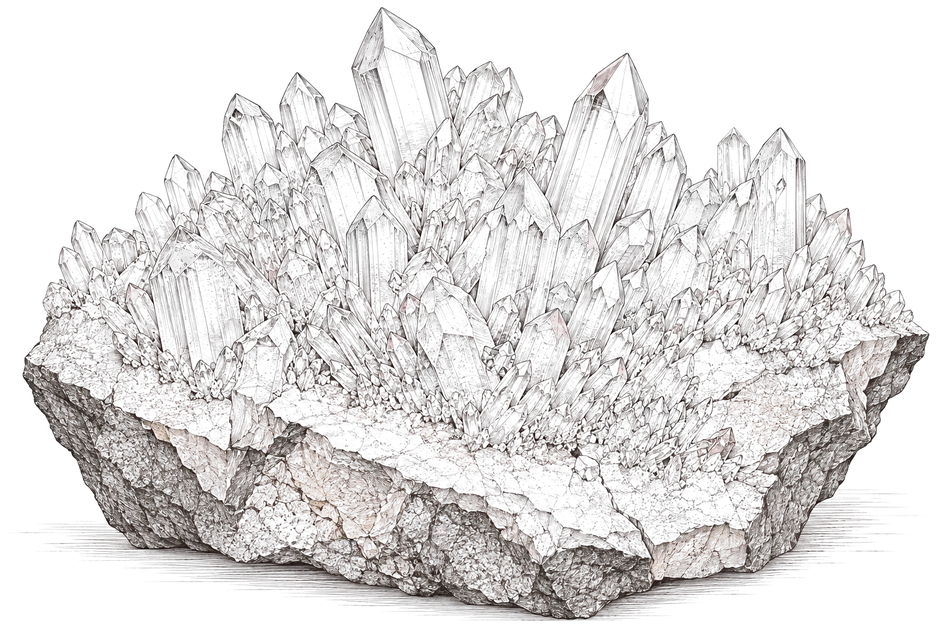
Lay your other stones on a selenite plate overnight, which is the most common use it has.
Run a wand slowly down the length of your body, a hand's width away, from head to feet, once.
Keep a bar on the windowsill of a room that feels stale.
Dust it with a dry brush.

Read here as a language of symbols. Medical, legal and financial questions belong with a professional.
Two more
What does Selenite pair with?
Stones are kept in small sets rather than alone, and these two are the usual company for this one.
What it is kept for
What do people reach for Selenite for?
The same stone, read through the thing you came here with.
Questions
What else do people ask about Selenite?
Can selenite get wet?
No. This is the one hard rule in the whole library. Gypsum is water soluble, so even a quick rinse etches the surface and long contact turns the piece to mush. Cleanse it with sound, smoke, moonlight or simply a dry cloth.
Does selenite really cleanse other stones?
It is the tradition, and a widely shared one, but nothing measurable happens on that plate. What it does reliably give you is a place where the stones live and a moment each evening when you handle them. That ritual is the useful part, and it is enough.
Next in the library
The stones beside this one.
Two ways on
One stone is a reminder, a library is a map.
A hundred and four stones and sixty four everyday uses, sorted the way a week arrives. If you came here through the body rather than the mineral, the seven chakras are the other way in.
- 104
- stones, each with what tradition says
- 64
- everyday uses, six stones under each
- 7
- centres, the same set read through the body