Labradorite: Meaning, Properties and How to Use It
Labradorite is the stone of the in between, the one tradition gives to people mid change. It is credited with waking intuition and with quietly shielding you while you change, so the flash of colour gets read as something hidden showing itself. Practitioners call it the magician's stone.
What tradition says
What is Labradorite known for?
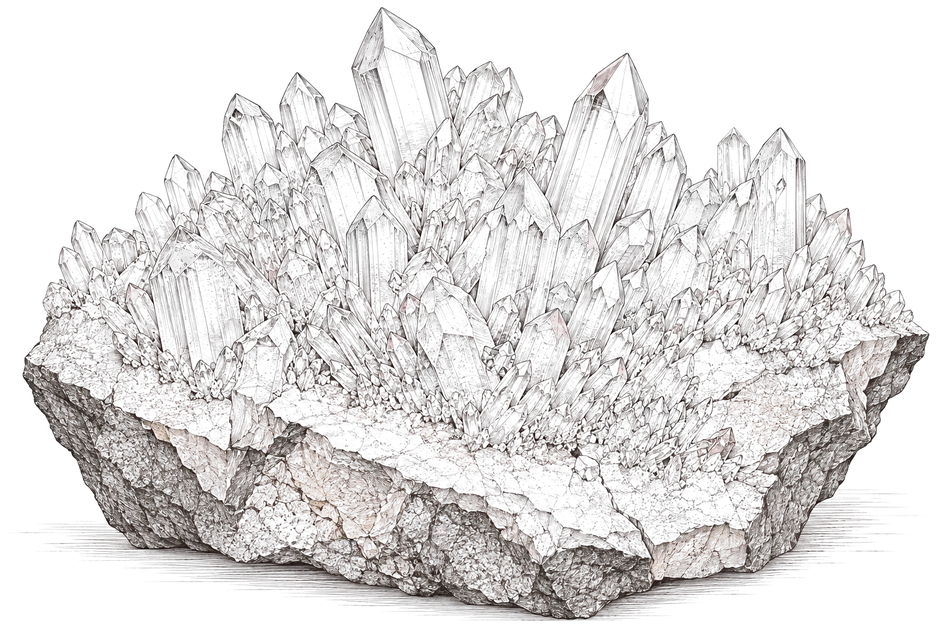
The mineral was named after the Labrador coast, where Moravian missionaries collected it in 1770, though Inuit tradition already told of a hunter who struck the rocks and let the northern lights out. That story does most of the work in modern lore. The flash, called labradorescence, comes from light bouncing inside internal layers, so the stone looks grey until you turn it. Writers read that as a description of a person mid transformation.
The practice
How do you use Labradorite?
Wear it as a ring or pendant where you will catch the flash during the day, because the turning is half the practice.
Keep a palm stone at the desk while you make a decision you keep postponing.
Before sleep, hold it and ask for one clear image rather than a full answer.

Read here as a language of symbols. Medical, legal and financial questions belong with a professional.
Two more
What does Labradorite pair with?
Stones are kept in small sets rather than alone, and these two are the usual company for this one.
What it is kept for
What do people reach for Labradorite for?
The same stone, read through the thing you came here with.
Questions
What else do people ask about Labradorite?
Why does my labradorite not flash?
Because the layers only return light at certain angles. Tilt it under a single strong source, a window or a lamp, not diffuse room light. Cut matters too. A slab sawn across the layers flashes from every side, while a badly oriented cabochon stays grey no matter what you do.
Is labradorite the same as spectrolite?
Same mineral, different deposit. Spectrolite is the Finnish material, darker in the body and flashing across the full range including red and orange, which are rare in Canadian stone. The trade charges more for it. The tradition makes no distinction between the two.
Next in the library
The stones beside this one.
Two ways on
One stone is a reminder, a library is a map.
A hundred and four stones and sixty four everyday uses, sorted the way a week arrives. If you came here through the body rather than the mineral, the seven chakras are the other way in.
- 104
- stones, each with what tradition says
- 64
- everyday uses, six stones under each
- 7
- centres, the same set read through the body