Lapis Lazuli: Meaning, Properties and How to Use It
Lapis is the stone of the spoken truth. Tradition ties it to saying the thing plainly, to the throat and to the kind of insight that arrives as understanding rather than feeling. For six thousand years it belonged to rulers, priests and scribes, and that authority is still what the lore hears in it.
What tradition says
What is Lapis Lazuli known for?
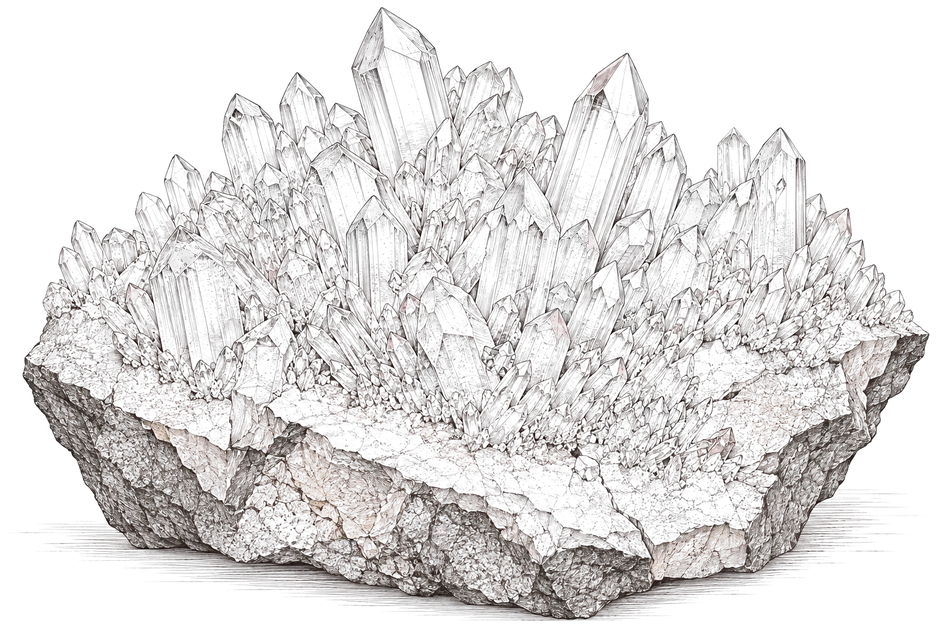
Almost all the lapis of the ancient world came from one valley in Afghanistan, and it travelled from there to Ur, to Tutankhamun's mask and eventually into Renaissance panel painting as ultramarine, the most expensive pigment ever ground. Its value was never subtle. The lore keeps the royal note and adds honesty, because a stone the colour of the sky was read as the place where truth is kept.
The practice
How do you use Lapis Lazuli?
Wear it at the throat before a conversation you have been rehearsing for weeks.
Hold a piece and say the sentence out loud once to the empty room, then go and say it to the person.
On writing days, keep it beside the page rather than on you.

Read here as a language of symbols. Medical, legal and financial questions belong with a professional.
Two more
What does Lapis Lazuli pair with?
Stones are kept in small sets rather than alone, and these two are the usual company for this one.
What it is kept for
What do people reach for Lapis Lazuli for?
The same stone, read through the thing you came here with.
Questions
What else do people ask about Lapis Lazuli?
How do I spot fake lapis?
Real lapis has uneven colour, white calcite veining and small brassy flecks of pyrite that catch the light. Perfectly even navy with no inclusions at a low price is dyed jasper. Acetone on a hidden spot lifts dye off an imitation and does nothing at all to real stone.
Can lapis lazuli go in water?
Better not. It is porous and soft enough that rinsing dulls the surface over time, and salt water will pit it outright. Wipe it with a dry cloth. Cleanse it with sound, smoke or a night on selenite instead, and never make an elixir by immersion.
Next in the library
The stones beside this one.
Two ways on
One stone is a reminder, a library is a map.
A hundred and four stones and sixty four everyday uses, sorted the way a week arrives. If you came here through the body rather than the mineral, the seven chakras are the other way in.
- 104
- stones, each with what tradition says
- 64
- everyday uses, six stones under each
- 7
- centres, the same set read through the body