Iolite: Meaning, Properties and How to Use It
Iolite is traditionally called a stone of navigation, and the lore is about finding your own direction rather than following someone else's. Crystal writers give it the third eye and tie it to seeing a situation as it actually is. The old Norse story of a sun stone at sea sits under most of the modern reading.
What tradition says
What is Iolite known for?
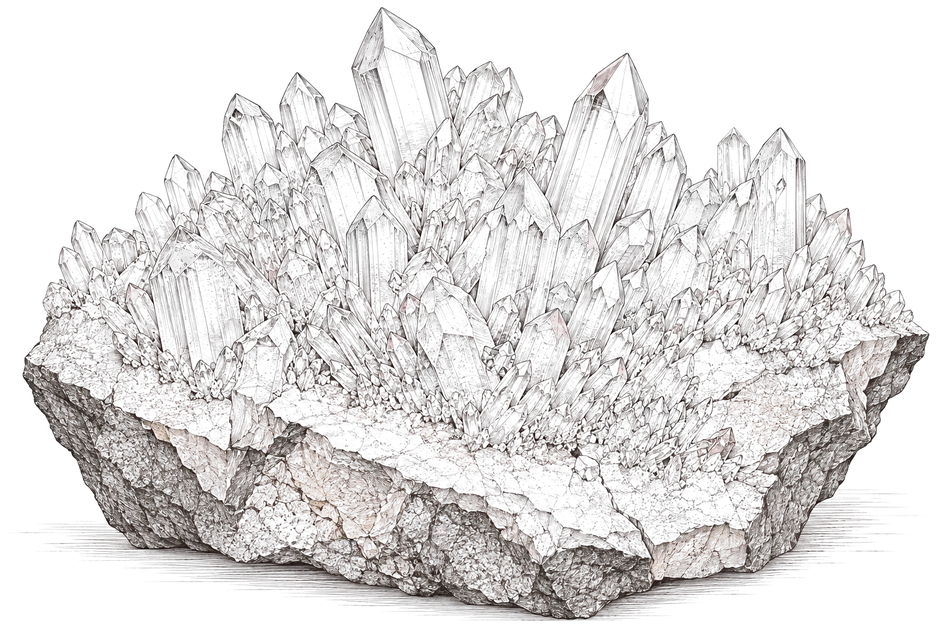
Iolite is gem quality cordierite and it is strongly pleochroic, so the same stone looks violet blue from one angle and pale yellow from another. That shift is the physical fact the navigation lore grew out of, since thin slices can indicate the direction of polarised light. Whether Norse sailors used iolite specifically is unproven, but the story is repeated in nearly every crystal source.
The practice
How do you use Iolite?
Turn the stone slowly in the light and watch the colour change while you hold a decision in mind, which is the practice most sources describe.
People carry it through a period of choosing between two paths and set it aside once the choice is made.
It is worn as a ring more often than kept on a shelf.

Read here as a language of symbols. Medical, legal and financial questions belong with a professional.
Two more
What does Iolite pair with?
Stones are kept in small sets rather than alone, and these two are the usual company for this one.
What it is kept for
What do people reach for Iolite for?
The same stone, read through the thing you came here with.
Questions
What else do people ask about Iolite?
Is iolite a cheap sapphire substitute?
It is sold that way and the trade name water sapphire exists, but it is a different mineral and softer. The tradition reads it on its own terms, around direction and seeing clearly. Buying it as a stand in usually disappoints.
Why does my iolite look grey sometimes?
Pleochroism. You are seeing the second colour axis, which is pale straw or grey. Tilt the stone and the violet blue comes back. Well cut iolite shows the blue face up most of the time.
Next in the library
The stones beside this one.
Two ways on
One stone is a reminder, a library is a map.
A hundred and four stones and sixty four everyday uses, sorted the way a week arrives. If you came here through the body rather than the mineral, the seven chakras are the other way in.
- 104
- stones, each with what tradition says
- 64
- everyday uses, six stones under each
- 7
- centres, the same set read through the body