Moss Agate: Meaning, Properties and How to Use It
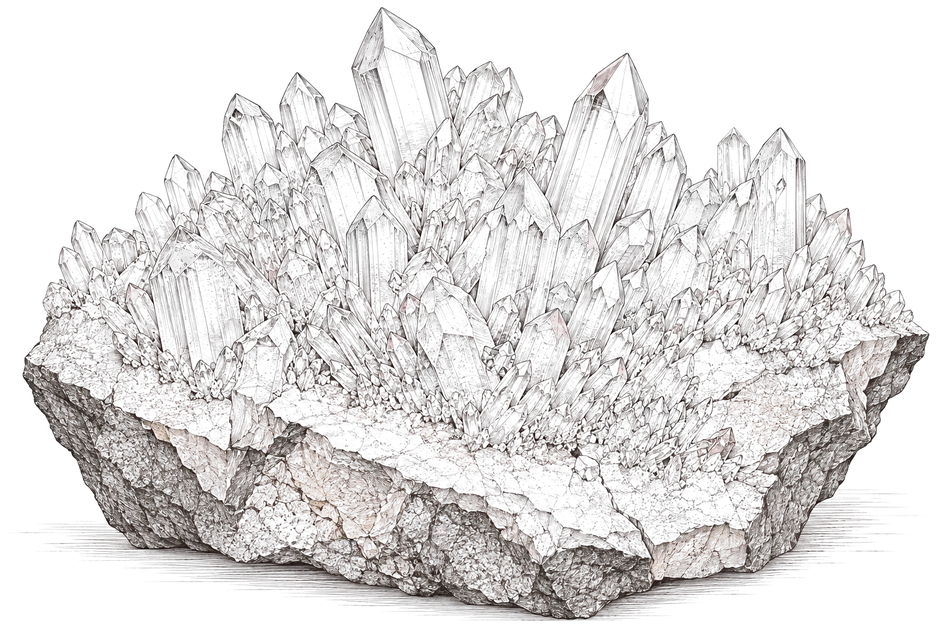
Moss agate is traditionally called the gardener's stone and is tied to slow growth that actually takes root. Crystal lore reads the green filaments inside as living things and connects it to abundance through patience. It is the stone people name for a beginning that needs time rather than speed.
What tradition says
What is Moss Agate known for?
The moss is not moss at all, it is dendritic growths of iron and manganese minerals inside translucent chalcedony, which happen to branch the way plants do. English farmers once hung it in fields and on ploughs to encourage a good season, and that folk use is where the gardener name comes from. Modern writers keep the agricultural reading and extend it to projects, businesses and anything planted early.
The practice
How do you use Moss Agate?
The traditional use is literal, a piece set in a plant pot, a window box or a garden bed.
Indoors people keep one near whatever they are trying to grow, including a new business folder or a savings jar.
Holding it while naming one thing you are willing to wait for is the common practice.

Read here as a language of symbols. Medical, legal and financial questions belong with a professional.
Two more
What does Moss Agate pair with?
Stones are kept in small sets rather than alone, and these two are the usual company for this one.
What it is kept for
What do people reach for Moss Agate for?
The same stone, read through the thing you came here with.
Questions
What else do people ask about Moss Agate?
Is there really moss inside?
No, and this is the most common misunderstanding about the stone. The green shapes are mineral dendrites that grew in branching patterns. Nothing organic is trapped in there.
Can I bury moss agate in soil?
Yes, it is hard and chemically stable, so soil and watering will not harm it. Rinse it off when you repot. Many people keep one buried in the same pot for years.
Next in the library
The stones beside this one.
Two ways on
One stone is a reminder, a library is a map.
A hundred and four stones and sixty four everyday uses, sorted the way a week arrives. If you came here through the body rather than the mineral, the seven chakras are the other way in.
- 104
- stones, each with what tradition says
- 64
- everyday uses, six stones under each
- 7
- centres, the same set read through the body