Agate: Meaning, Properties and How to Use It
Agate is traditionally the stone of slow, unglamorous stability, and it is the one handed to people who need things to hold still. Crystal lore reads its bands as patience laid down layer by layer. It is treated as a background stone that works over weeks rather than moments.
What tradition says
What is Agate known for?
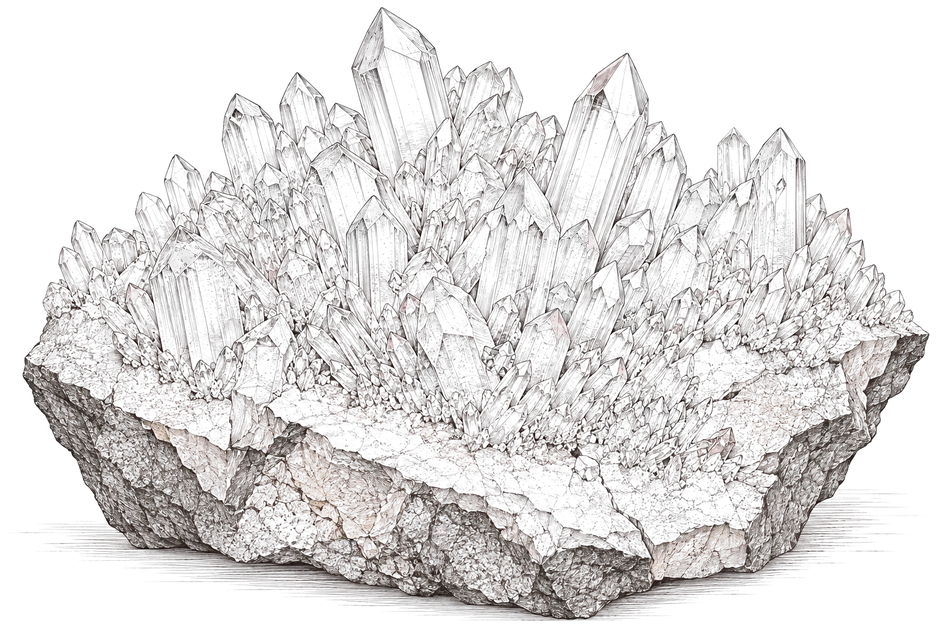
Agate is banded chalcedony and it takes its name from the Achates river in Sicily, where Theophrastus recorded it more than two thousand years ago. It has been carved for seals, cameos and amulets in almost every culture that had access to it, which is why the lore is so broad and so mild. Modern writers keep it general and describe agate as balance, endurance and the ordinary strength of routine.
The practice
How do you use Agate?
Agate suits placement more than ritual, so a slice on a shelf or a tumbled piece in a bowl by the keys is the usual approach.
People often choose one piece and leave it in the same spot for months.
It is also the common stone for a first set, because the lore asks nothing complicated of you.

Read here as a language of symbols. Medical, legal and financial questions belong with a professional.
Two more
What does Agate pair with?
Stones are kept in small sets rather than alone, and these two are the usual company for this one.
What it is kept for
What do people reach for Agate for?
The same stone, read through the thing you came here with.
Questions
What else do people ask about Agate?
Is agate dyed?
Often, yes. Agate is porous enough to take dye well, which is why bright slices are cheap and plentiful. Ask the seller directly, since honest ones will tell you without hesitation.
There are so many agates. Do I need a specific one?
Plain banded agate covers the general reading of steadiness. Named varieties like moss agate and blue lace agate carry narrower meanings. Start with a plain one and specialise later if you want to.
Next in the library
The stones beside this one.
Two ways on
One stone is a reminder, a library is a map.
A hundred and four stones and sixty four everyday uses, sorted the way a week arrives. If you came here through the body rather than the mineral, the seven chakras are the other way in.
- 104
- stones, each with what tradition says
- 64
- everyday uses, six stones under each
- 7
- centres, the same set read through the body