Snowflake Obsidian: Meaning, Properties and How to Use It
Snowflake obsidian is traditionally read as the softer face of obsidian, the one that shows the hard thing and the way out of it at once. Crystal lore takes the white patterns as light appearing inside a dark field. It is associated with looking honestly at a habit you would rather not name.
What tradition says
What is Snowflake Obsidian known for?
The snowflakes are crystals of cristobalite that grew inside the volcanic glass as it cooled slowly, so the pattern is a record of time passing. Crystal writers treat plain obsidian as blunt and this variety as tolerable, the version you can sit with for a while. It is frequently recommended for people working on something they have been avoiding, and it is described as revealing rather than protecting.
The practice
How do you use Snowflake Obsidian?
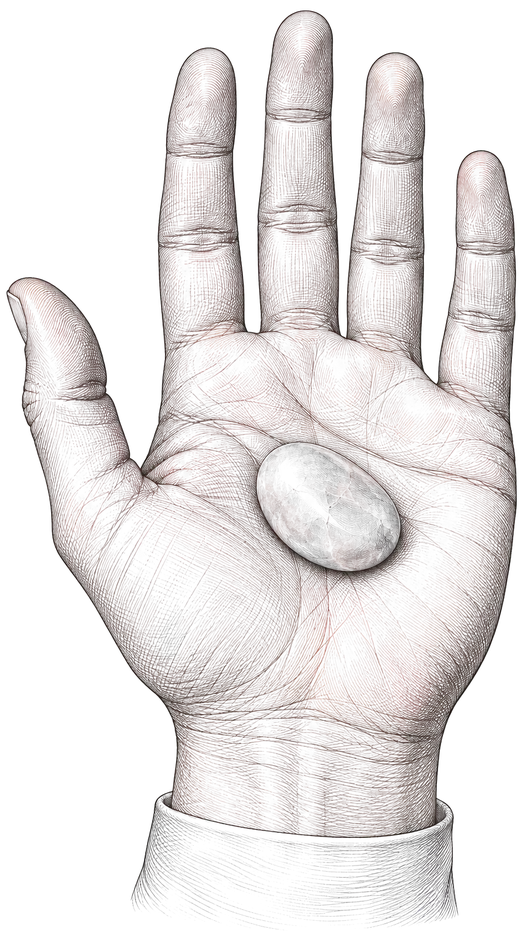
Sit with it in the hand for a few minutes at the end of the day and let one honest thought arrive without arguing with it.
Many people use it during a period of changing a habit and put it away afterwards.
It is rarely worn, because tradition treats it as a stone for deliberate sessions.
Read here as a language of symbols. Medical, legal and financial questions belong with a professional.
Two more
What does Snowflake Obsidian pair with?
Stones are kept in small sets rather than alone, and these two are the usual company for this one.
What it is kept for
What do people reach for Snowflake Obsidian for?
The same stone, read through the thing you came here with.
Questions
What else do people ask about Snowflake Obsidian?
Is snowflake obsidian gentler than black obsidian?
That is the standard reading in crystal writing, yes. Black obsidian is described as confrontational and the snowflake variety as the same honesty at a slower pace. People who found plain obsidian too much usually switch to this.
What are the white patches made of?
Cristobalite, a form of silica that crystallised inside the glass while it cooled. They are natural and not painted or added. Their size and spread vary by locality.
Next in the library
The stones beside this one.
Two ways on
One stone is a reminder, a library is a map.
A hundred and four stones and sixty four everyday uses, sorted the way a week arrives. If you came here through the body rather than the mineral, the seven chakras are the other way in.
- 104
- stones, each with what tradition says
- 64
- everyday uses, six stones under each
- 7
- centres, the same set read through the body