Unakite: Meaning, Properties and How to Use It
Unakite is traditionally called a stone of gentle release, used for letting go of something you are not yet ready to lose. Crystal lore reads the pink and green together as heart and healing in the same piece. It is associated with recovery that takes its own time.
What tradition says
What is Unakite known for?
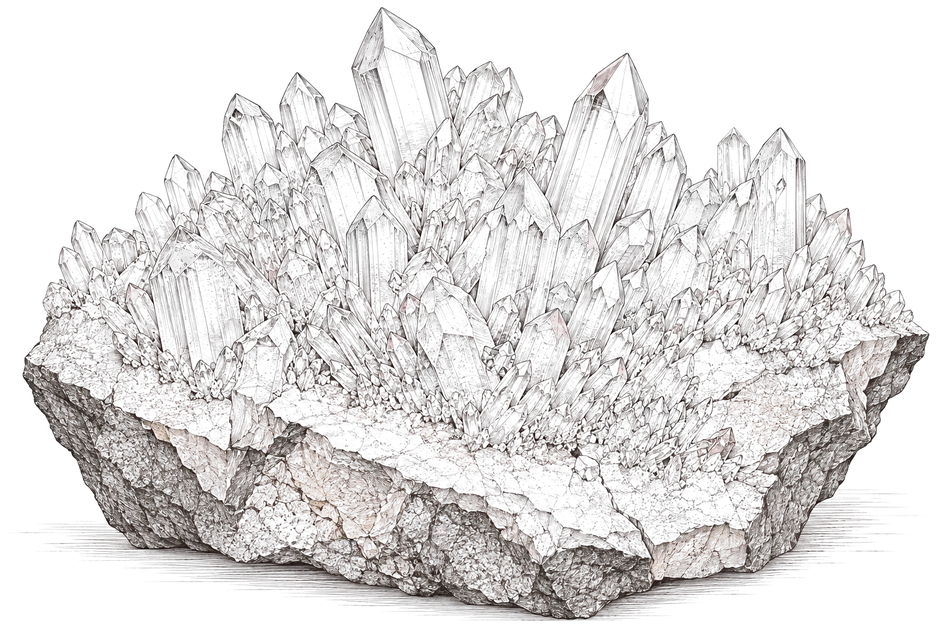
Unakite is not a single mineral but a granite made of pink feldspar, green epidote and clear quartz, first described in the Unaka range of the Appalachians. The lore grew around the colour combination rather than around any old tradition, since it is a fairly recent addition to crystal books. Writers place it with the heart and describe it as patient, homely and undramatic, a stone for the long middle of getting better.
The practice
How do you use Unakite?
Keep a tumbled piece in the room where you actually rest rather than where you work.
A common practice is to hold it while naming one thing you are ready to loosen your grip on, without demanding that it go today.
It is often given as a get well gift in place of flowers.

Read here as a language of symbols. Medical, legal and financial questions belong with a professional.
Two more
What does Unakite pair with?
Stones are kept in small sets rather than alone, and these two are the usual company for this one.
What it is kept for
What do people reach for Unakite for?
The same stone, read through the thing you came here with.
Questions
What else do people ask about Unakite?
Why does unakite look so different piece to piece?
It is a rock, not a mineral, so the ratio of pink feldspar to green epidote varies with every block. Some pieces read mostly green and others mostly pink. Tradition does not rank them.
Unakite or rose quartz for letting go?
Rose quartz is read as comfort and unakite as slow release, so they cover different parts of the same stretch. Many people use rose quartz early and unakite later. Keeping both is common.
Next in the library
The stones beside this one.
Two ways on
One stone is a reminder, a library is a map.
A hundred and four stones and sixty four everyday uses, sorted the way a week arrives. If you came here through the body rather than the mineral, the seven chakras are the other way in.
- 104
- stones, each with what tradition says
- 64
- everyday uses, six stones under each
- 7
- centres, the same set read through the body