Kunzite: Meaning, Properties and How to Use It
Kunzite is traditionally associated with letting the guard down and with love that does not have to be defended. Crystal lore reads its pale lilac pink as tenderness without drama. It is named for people who have become armoured and would like to stop.
What tradition says
What is Kunzite known for?
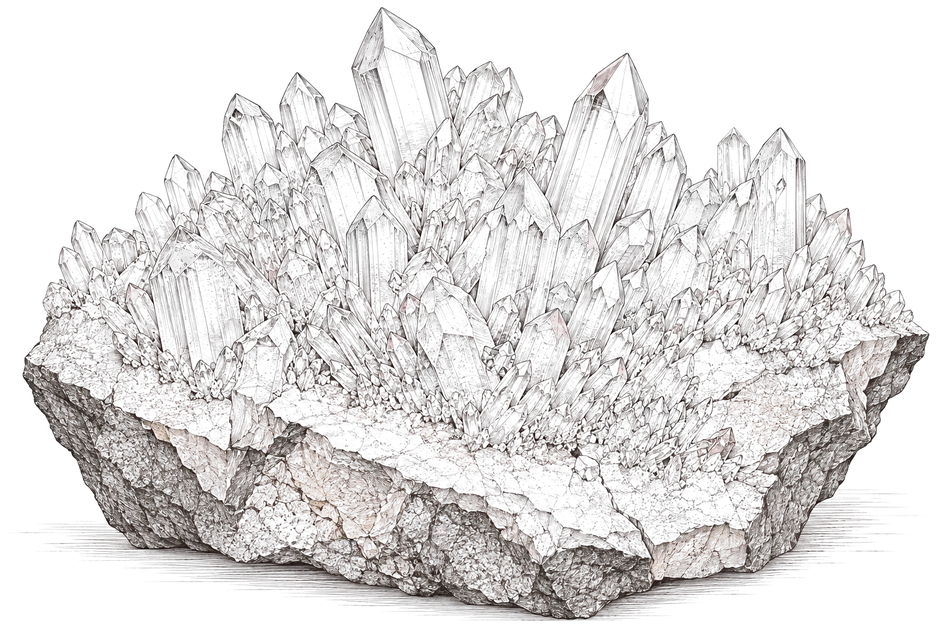
The stone was identified in California in 1902 and named for the gemologist George Kunz, so its lore is young and mostly written in the twentieth century. Those writers place it with the heart and describe it as an opener rather than a protector. The colour comes from manganese and the crystals grow in flat striated blades that glow from within when they are cut well.
The practice
How do you use Kunzite?
Hold it over the centre of the chest for a few slow breaths, which is the placement almost every source gives.
Many people wear it as a pendant on days that ask for openness rather than armour.
Keep it in a drawer between uses and it will stay the colour you bought.

Read here as a language of symbols. Medical, legal and financial questions belong with a professional.
Two more
What does Kunzite pair with?
Stones are kept in small sets rather than alone, and these two are the usual company for this one.
What it is kept for
What do people reach for Kunzite for?
The same stone, read through the thing you came here with.
Questions
What else do people ask about Kunzite?
My kunzite looks paler than when I bought it. What happened?
Light exposure, almost certainly. Kunzite is one of the few stones that genuinely fades in ordinary daylight. There is no way to bring the colour back, so storage in the dark is the only real answer.
Kunzite or morganite for the same purpose?
Both are read as gentle heart stones. Morganite is far more durable and fine for everyday wear, while kunzite is treated as an occasional stone because of the fading. Choose by how you plan to keep it.
Next in the library
The stones beside this one.
Two ways on
One stone is a reminder, a library is a map.
A hundred and four stones and sixty four everyday uses, sorted the way a week arrives. If you came here through the body rather than the mineral, the seven chakras are the other way in.
- 104
- stones, each with what tradition says
- 64
- everyday uses, six stones under each
- 7
- centres, the same set read through the body