Tektite: Meaning, Properties and How to Use It
Tektite is the wider family that moldavite belongs to: dark natural glass born from meteorite impacts. It is given the role of a perspective stone — the one that shrinks a personal crisis back to its real size. Traditions also treat it as protective and steadying.
What tradition says
What is Tektite known for?
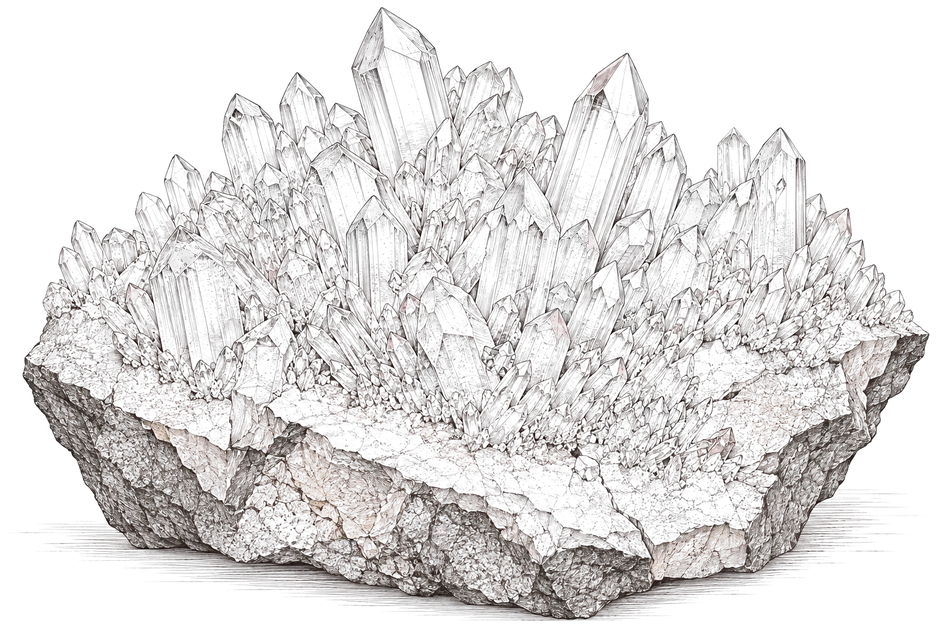
Tektites are found in strewn fields across Indochina, Australia, the Ivory Coast and Texas, black or brown, often shaped like buttons, teardrops and dumbbells by their flight through air. Aboriginal Australian and Southeast Asian traditions kept them as luck and weather stones. Modern practice reads them as grounding rather than ecstatic: the stone of the long view, the one held when a person needs to remember how old the world is.
The practice
How do you use Tektite?
Tektite is a pocket stone more than an altar stone.
Carry one through a week that feels enormous, and take it out when the feeling peaks — the cool, pitted surface under a thumb is the whole practice.
Some people keep a piece on a desk as a plain reminder that the deadline is not the universe.

Read here as a language of symbols. Medical, legal and financial questions belong with a professional.
Two more
What does Tektite pair with?
Stones are kept in small sets rather than alone, and these two are the usual company for this one.
What it is kept for
What do people reach for Tektite for?
The same stone, read through the thing you came here with.
Questions
What else do people ask about Tektite?
Is tektite the same as meteorite?
No. A meteorite is the visitor itself. A tektite is earth rock melted and flung into the air by the impact, then frozen into glass as it fell. The stone is local; only the event came from space.
Can I wear tektite daily?
Yes, and most people do — it is tough enough for a pocket. Set stones should be checked now and then, since glass can crack from a hard knock rather than scratch the way a mineral would.
Next in the library
The stones beside this one.
Two ways on
One stone is a reminder, a library is a map.
A hundred and four stones and sixty four everyday uses, sorted the way a week arrives. If you came here through the body rather than the mineral, the seven chakras are the other way in.
- 104
- stones, each with what tradition says
- 64
- everyday uses, six stones under each
- 7
- centres, the same set read through the body