Scolecite: Meaning, Properties and How to Use It
Scolecite is given to sleep and to minds that will not stop narrating. Traditions call it a stone of deep peace, with a specific reputation for vivid, restful dreaming. It is one of the few stones described as quieting rather than doing anything at all.
What tradition says
What is Scolecite known for?
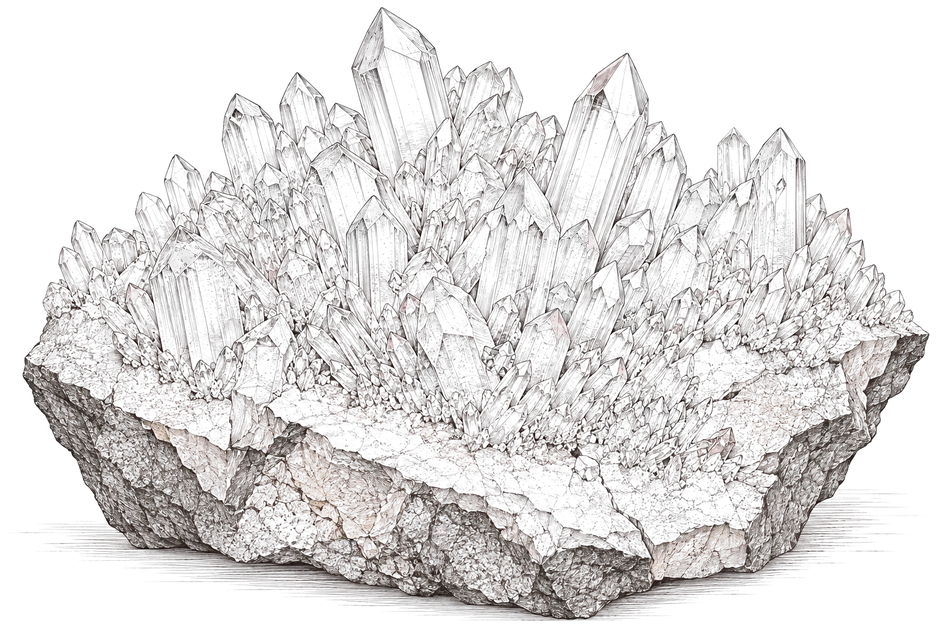
A white zeolite from the basalt cavities of Maharashtra in India, scolecite grows as sprays of fine silky needles, sometimes fused into a soft radiating mass. It has no historical lapidary reputation whatsoever — it reached spiritual practice through the Indian mineral trade of the last fifty years. The role it was given is narrow and consistent: night stone, meditation stone, the one on the shelf nearest the bed.
The practice
How do you use Scolecite?
Keep a spray on the bedside table and look at it, not through it, for a minute before the light goes off.
In sitting practice people rest it in the upturned palm, where its lightness is easy to forget — which is the point.
Small tumbled pieces go under a pillowcase rather than under a pillow.


Read here as a language of symbols. Medical, legal and financial questions belong with a professional.
Two more
What does Scolecite pair with?
Stones are kept in small sets rather than alone, and these two are the usual company for this one.
What it is kept for
What do people reach for Scolecite for?
The same stone, read through the thing you came here with.
Questions
What else do people ask about Scolecite?
Will scolecite give me vivid dreams?
That is the traditional claim, and there is no evidence for it. What does affect dream recall is intending to remember and writing things down on waking. The stone can be the cue for that habit.
How is scolecite different from selenite?
Both are white and fibrous, but selenite is gypsum and splits into flexible sheets, while scolecite is a zeolite that grows in radiating needles. Neither should get wet, for different chemical reasons.
Next in the library
The stones beside this one.
Two ways on
One stone is a reminder, a library is a map.
A hundred and four stones and sixty four everyday uses, sorted the way a week arrives. If you came here through the body rather than the mineral, the seven chakras are the other way in.
- 104
- stones, each with what tradition says
- 64
- everyday uses, six stones under each
- 7
- centres, the same set read through the body