Ametrine: Meaning, Properties and How to Use It
Ametrine is one crystal holding both amethyst and citrine, and it is read exactly that way: a stone of balance between calm and drive. Traditions give it to decisions where feeling and reasoning disagree. It is also called a stone of sustainable effort.
What tradition says
What is Ametrine known for?
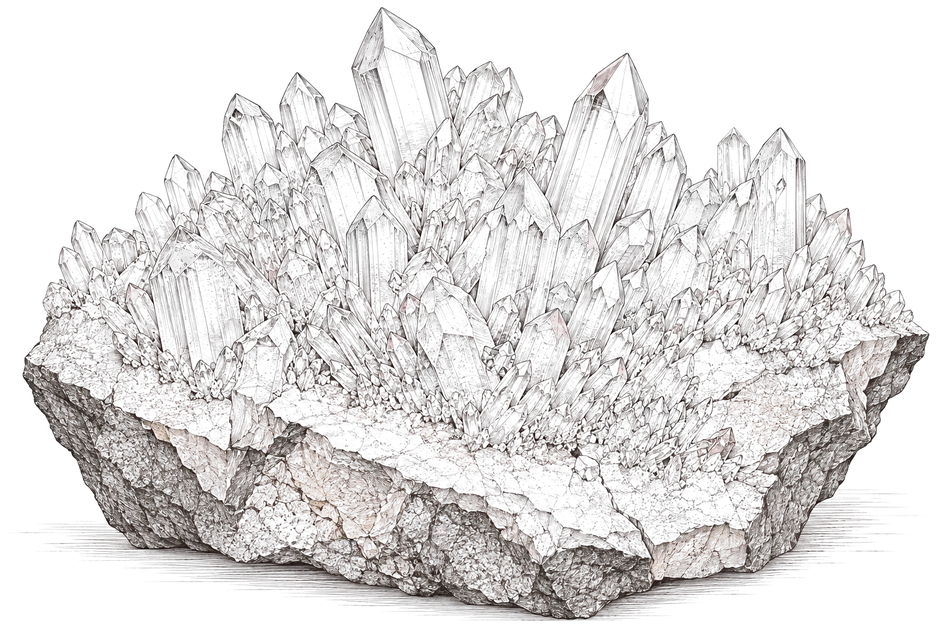
Natural ametrine comes almost entirely from the Anahi mine in Bolivia, where the iron in a single quartz crystal was oxidised differently on either side of a growth boundary. Legend has the mine given as a dowry to a Spanish conquistador in the seventeenth century. Crystal practice reads the split colour as a picture of a whole person and recommends it for the decision that keeps flipping every time you revisit it.
The practice
How do you use Ametrine?
Turn the stone so the purple end faces you when you need to slow down and the gold end when you need to move.
That sounds like theatre, and it is, but it makes the two states nameable.
People also keep a piece on a desk for long afternoons, as a reminder that pace matters more than push.

Read here as a language of symbols. Medical, legal and financial questions belong with a professional.
Two more
What does Ametrine pair with?
Stones are kept in small sets rather than alone, and these two are the usual company for this one.
What it is kept for
What do people reach for Ametrine for?
The same stone, read through the thing you came here with.
Questions
What else do people ask about Ametrine?
Is ametrine natural or man-made?
Both exist. Natural stone comes from Bolivia and is sold with the locality named. Anything unusually cheap, unusually large or with a razor-sharp colour line is probably treated or grown.
Does ametrine fade in sunlight?
The purple half does, like all amethyst. Keep it off a sunny windowsill. The golden half is stable, so a faded stone slowly turns into plain citrine.
Next in the library
The stones beside this one.
Two ways on
One stone is a reminder, a library is a map.
A hundred and four stones and sixty four everyday uses, sorted the way a week arrives. If you came here through the body rather than the mineral, the seven chakras are the other way in.
- 104
- stones, each with what tradition says
- 64
- everyday uses, six stones under each
- 7
- centres, the same set read through the body