Thulite: Meaning, Properties and How to Use It
Thulite is the social heart stone: love directed outward, into company, rather than inward in solitude. Traditions link it to warmth, easy generosity and recovering the pleasure of being around people. It is often given to someone coming out of a long withdrawn stretch.
What tradition says
What is Thulite known for?
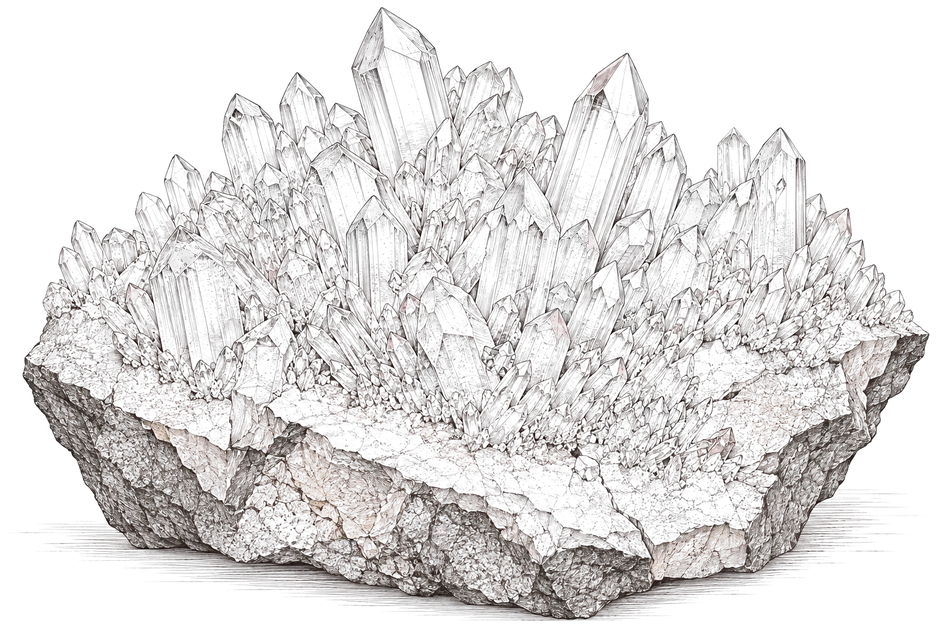
A pink manganese-bearing zoisite, thulite was named for Thule, the old northern name for Norway, where it was first found in 1820. Norway made it a national ornamental stone long before crystal practice existed. That practice reads its rosy density as sociable rather than romantic: the stone of dinner tables, reconciliations and saying yes to the invitation you were going to decline.
The practice
How do you use Thulite?
Carry a tumbled piece to the thing you are tempted to skip — the birthday, the reunion, the first evening back with a group.
Touch it in the doorway before you go in.
At home, some people keep a piece on the table where guests actually sit, as a small standing invitation to themselves.

Read here as a language of symbols. Medical, legal and financial questions belong with a professional.
Two more
What does Thulite pair with?
Stones are kept in small sets rather than alone, and these two are the usual company for this one.
What it is kept for
What do people reach for Thulite for?
The same stone, read through the thing you came here with.
Questions
What else do people ask about Thulite?
Is thulite related to tanzanite?
Yes, both are zoisite. Manganese makes thulite pink and opaque; vanadium makes tanzanite blue and transparent. Same mineral family, completely different look and price.
How do I tell thulite from rhodonite?
Rhodonite almost always carries black manganese veining. Thulite is pink with white and grey, rarely black, and often shows a faint sparkle from the zoisite crystals inside.
Next in the library
The stones beside this one.
Two ways on
One stone is a reminder, a library is a map.
A hundred and four stones and sixty four everyday uses, sorted the way a week arrives. If you came here through the body rather than the mineral, the seven chakras are the other way in.
- 104
- stones, each with what tradition says
- 64
- everyday uses, six stones under each
- 7
- centres, the same set read through the body