Chalcedony: Meaning, Properties and How to Use It
Chalcedony is called the speaker's stone — the one given to people who have to say something difficult kindly. Traditions tie it to gentle speech, hospitality and the easing of old resentment. It is a calming stone rather than an energising one.
What tradition says
What is Chalcedony known for?
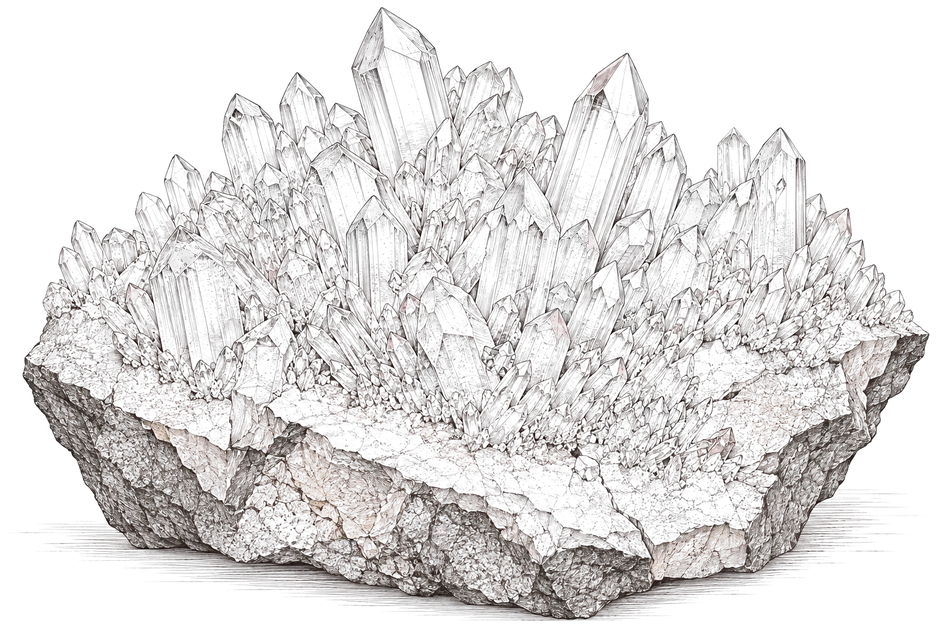
Chalcedony is microcrystalline quartz, the same family as agate and carnelian, but the name is usually kept for the plain milky blue and grey-blue material. Roman writers cut it for seals and believed it dispelled melancholy. Byzantine and later European lapidaries called it a stone of public speaking and good will. Modern practice keeps both threads: it is handed to nervous speakers and to households that keep arguing over the same thing.
The practice
How do you use Chalcedony?
Hold a tumbled piece while you rehearse the sentence you are dreading, out loud, twice.
Then put it in the pocket you will actually reach into.
For household friction, some people keep a larger piece in the room where the conversations go wrong, and touch it before answering rather than after.

Read here as a language of symbols. Medical, legal and financial questions belong with a professional.
Two more
What does Chalcedony pair with?
Stones are kept in small sets rather than alone, and these two are the usual company for this one.
What it is kept for
What do people reach for Chalcedony for?
The same stone, read through the thing you came here with.
Questions
What else do people ask about Chalcedony?
What is the difference between chalcedony and agate?
They are the same mineral. Agate is the banded form; chalcedony is the name used when the material is even in colour. Shops split them by look, not by chemistry.
Is blue chalcedony dyed?
Sometimes. Natural blue is soft and slightly cloudy; a vivid even blue with colour caught in the cracks is dyed. Dye is not a scandal, but it should be stated on the label.
Next in the library
The stones beside this one.
Two ways on
One stone is a reminder, a library is a map.
A hundred and four stones and sixty four everyday uses, sorted the way a week arrives. If you came here through the body rather than the mineral, the seven chakras are the other way in.
- 104
- stones, each with what tradition says
- 64
- everyday uses, six stones under each
- 7
- centres, the same set read through the body