retreat curatorby milena chernomorets

Retreats

Christian Retreats: Days given over to prayer

A monastery guest house takes people from outside the community.

A Christian retreat is a deliberate withdrawal from ordinary life for prayer, usually for a weekend or a week, usually in a monastery guest house or a house kept by a religious order. At the centre of it is a relationship with God rather than self-improvement, and silence is there to make listening possible. Most houses receive guests of any confession.

Monastery guest housesDirected and undirected
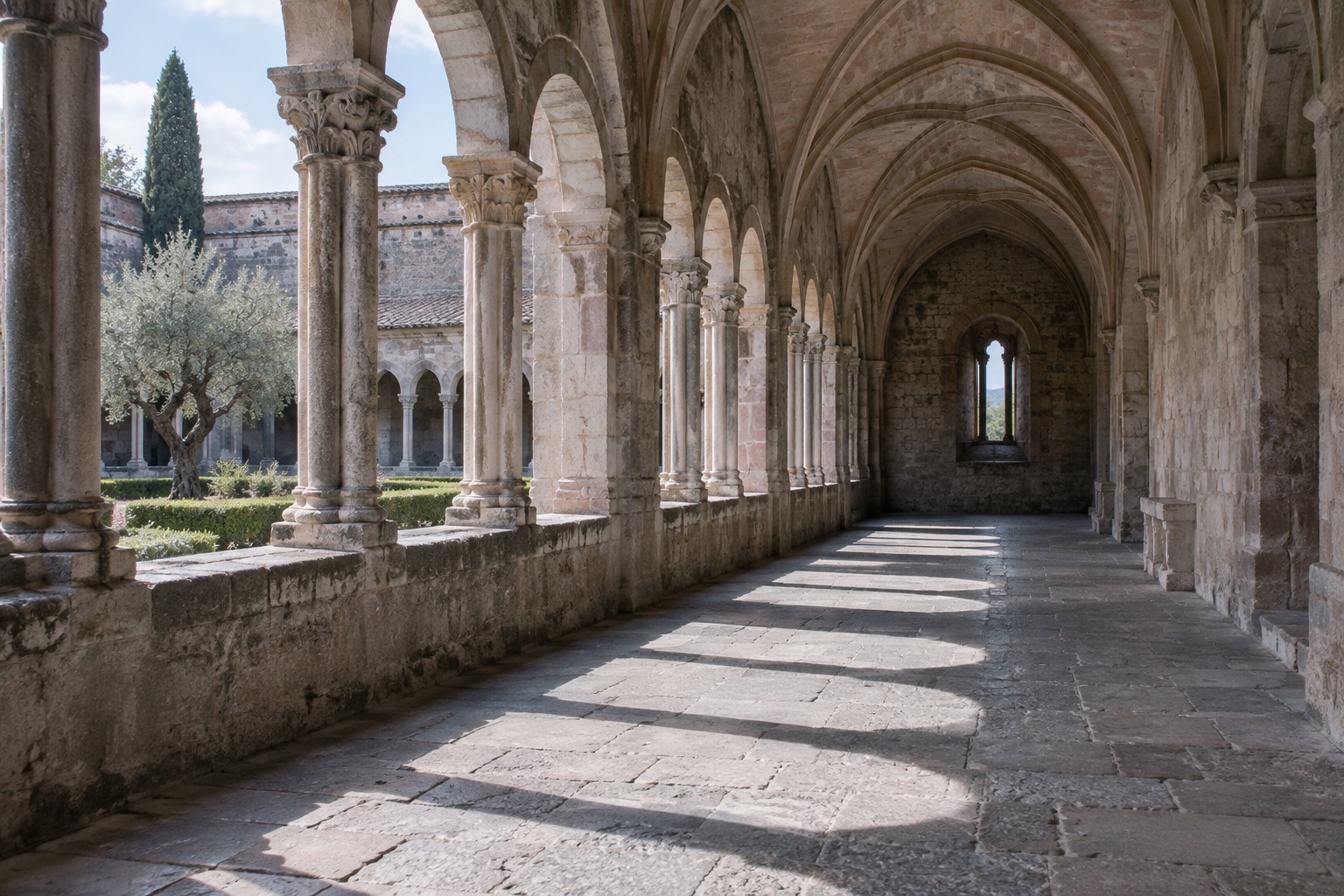
The stone gallery of a monastery cloister, arched shadows on the flags, empty.

01

What is a Christian retreat, and how old is the idea?

The word means what it says. You step back. You leave the phone, the work, the household and the noise of your own planning for a set number of days, and you give that time to prayer. Christians have been doing this since the third century, when men and women went out into the Egyptian desert to live simply and pray, and the short sayings they left behind are still read today. Monastic communities inherited the pattern and gave it structure. The organised retreat as we now know it, with a programme and a director, took shape much later and was strongly formed by the Spiritual Exercises of Ignatius of Loyola in the sixteenth century. What stays constant across all of it is the withdrawal itself. Not a conference, not a holiday with a chapel attached, but a stretch of days deliberately emptied so that something other than your own voice can be heard.
02

What forms does a Christian retreat take?

The private retreat is the plainest. You book a room in a guest house, keep silence, and nobody organises your day. You pray, read, walk and join the community's services if you want to. A guided or preached retreat has a director who gives talks once or twice a day to the whole group, with quiet in between. A parish or group weekend is more social, with shared meals, discussion and often music, usually less silence, and it suits people who would find three silent days heavy. The Ignatian directed retreat is different in kind: you meet a director individually each day, she gives you a passage of Scripture to pray with, and the next day you say what happened in the prayer. Those run from a long weekend to eight days, and the full Spiritual Exercises take thirty. Most houses say plainly which of these they offer, and confusing them is the commonest booking mistake.

What is a day inside a monastery guest house actually like?

The day is built around the hours of prayer. In a Benedictine house the community gathers several times between early morning and nightfall, beginning before dawn and ending with Compline, after which the house keeps silence until morning. Guests are usually welcome at all of it and obliged to none of it. Meals are often taken in silence, sometimes with one person reading aloud from a lectern. There is work, a garden, a kitchen, a bindery, bees, and guests are sometimes invited to help, which is a relief when a whole day of prayer starts to feel long. Rooms are simple and mostly single. In an Orthodox monastery the rhythm is similar but the services are longer and largely sung, and much of the congregation stands. Retreat houses kept by orders or parishes are gentler: fewer offices, more conversation, softer beds, and a chapel left open all day.

How is this different from a spiritual retreat in the wider sense?

On the surface they look alike: quiet, simple food, early mornings, no phone. The difference is what the week points at. A wellness or new-age retreat is generally organised around you, your nervous system, your patterns, your growth, and the teacher offers methods for working on yourself. A Christian retreat is organised around God, and the practices are prayer, Scripture, the sacraments where the tradition includes them, and the community's daily office. Silence is not a technique for calming the mind, though it often does calm it. It is there to make room for listening to someone other than yourself. Insight about your own life is expected to arrive, but as a by-product of attention turned outward. This is worth knowing in advance, because a person who wants guided breathwork and journalling prompts will find a monastery guest house strangely bare, and a person who wants prayer will find a wellness week strangely busy.

05

Can a believer practise silence and contemplative prayer without straying from her faith?

This worries many people, and it deserves a straight answer rather than reassurance. Silence and stillness are not imports. The Christian tradition has its own contemplative practices and has had them for a very long time. Lectio divina is the slow monastic reading of Scripture, where you read a short passage several times and stay with the phrase that holds you. The Jesus Prayer, central to Orthodox spirituality and to the Philokalia, is a short invocation repeated quietly, often with the breath. Centering prayer, developed by Trappist monks in the nineteen seventies, uses a single sacred word as consent to God's presence. Not everyone is easy with all three. A 1989 letter from the Vatican's doctrinal office on Christian meditation cautioned against treating bodily and psychological methods as if they produced grace, and Orthodox writers warn against intensive use of the Jesus Prayer without a guide. Read the cautions yourself and keep your own judgement.

06

How Christian houses differ and what to settle before you arrive

The confessions differ, and the differences are practical. Catholic houses range from strict contemplative abbeys to busy retreat centres. Orthodox monasteries usually expect modest dress, may lodge men and women separately and hold long services. Anglican, Lutheran and Methodist houses often keep a lighter office. Ecumenical centres receive everyone by design. You almost never need to be a member or baptised in order to stay, and nobody will quiz you, but communion in Catholic and Orthodox churches is normally reserved for their own faithful, so a guest stays in her seat or comes forward for a blessing where that is the custom. Four things vary from house to house and between them they decide the week. Whether guests are expected at every office. Whether the retreat is silent. Whether meals are shared. What you are asked to bring. Many guest houses ask for a freewill offering rather than a set fee, and the page on what a retreat costs covers the rest of the money question.

Where to go

Abbeys and retreat houses that take guests

Real places that run this themselves, on their own ground, with their own dates and programs.

New Camaldoli Hermitage

Big Sur, California

Camaldolese Benedictine hermitage above the Pacific; guests take private retreats in the monastic rhythm.

ChristianSilence

their site

Ghost Ranch

Abiquiú, New Mexico

Education and retreat center on the landscape Georgia O'Keeffe painted, run by the Presbyterian Church.

ChristianWellness

their site

Monastery of Christ in the Desert

Abiquiú, New Mexico

Benedictine abbey at the end of a long dirt road, where guests keep the monastic hours.

ChristianSilence

their site

Weston Priory

Weston, Vermont

Benedictine community known for its sung liturgy; guests come for quiet days and private retreats.

ChristianSilence

their site

Kanuga

Hendersonville, North Carolina

Episcopal conference and retreat center in the Blue Ridge, with guest programs and summer camps.

Christian

their site

The Franciscan Center

Tampa, Florida

Franciscan retreat center in Tampa offering directed, silent and group retreats.

ChristianSilence

their site

Our Lady of Florida Spiritual Center

North Palm Beach, Florida

Passionist retreat center on the Intracoastal, offering directed and silent weekend retreats.

ChristianSilence

their site

Eastern Point Retreat House

Gloucester, Massachusetts

Jesuit retreat house on the Atlantic, known for silent Ignatian retreats with a spiritual director.

ChristianSilence

their site

The whole directory

Questions

What people ask about monastery retreats.

Do I have to be religious to stay in a monastery guest house?

Usually not. Benedictine hospitality in particular rests on a line in the Rule about receiving every guest as Christ, and many houses take people who arrive simply exhausted and curious. What is expected is respect for the rhythm: quiet in the corridors, modest dress in the chapel, turning up to meals on time. Some communities do ask that guests come for prayer rather than only for the quiet, and houses like that say so plainly in their own description.

How long should a first Christian retreat be?

Two or three days is a sensible first attempt, especially if it is silent. The first day is mostly your own restlessness settling, the second is when the day's rhythm starts carrying you instead of the other way round. A week is a serious undertaking and better attempted once you know how you react to silence. If you are drawn to the Ignatian form, most houses offer a shorter directed retreat before anyone suggests the longer ones.

Will I have to keep silence the whole time?

It depends entirely on the kind of retreat, which is why the listing should say. On a silent retreat the silence usually holds from after the evening office until the following midday or all day, with the director and the guest master as the exceptions you may always speak to. On a parish weekend there may be no silence at all beyond meals. Nobody enforces it with rules; the community simply keeps it and guests fall in.

Do I have to go to confession or talk to a priest?

No. Confession is offered in Catholic and Orthodox houses and is normally available on request, but it is an offer and not a requirement, and nobody keeps a list. Spiritual direction works the same way, except on a directed retreat where the daily conversation is the whole structure and you are booking precisely for it. If you would like to talk to someone and do not know how to ask, say so to the guest master and it will be arranged quietly.

Where next

Most of these places take guests from outside the community.

Abbeys and retreat houses take guests who are not members and often ask only what you can give. The directory names the ones with their own programme, and the cost page explains how donation based stays work.

A week after which the thing that would not move for years has finally moved.

Go on a retreat with Milena

Read here as a language of symbols. Medical, legal and financial questions belong with a professional.