Danburite: Meaning, Properties and How to Use It
Danburite is given to grief and to people running on empty. Traditions call it a gentle stone, one that softens rather than pushes, and links the heart to something calmer above it. It is reached for when comfort matters more than change.
What tradition says
What is Danburite known for?
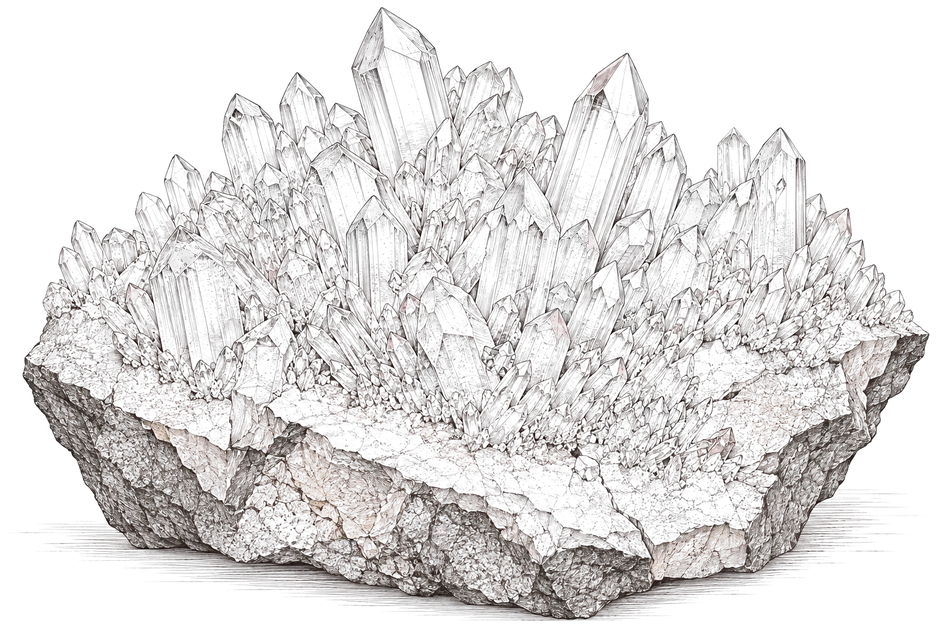
Named for Danbury in Connecticut and mined today mostly in Mexico, danburite grows in clear, faintly pink or straw-yellow blades. Modern crystal writers place it in the angelic family beside celestite and call it a stone of release — the one held after a loss, when nothing sharper will do. Older lapidary tradition barely mentions it, so nearly everything said about danburite is recent, and gentle by design.
The practice
How do you use Danburite?
Keep a piece where you rest rather than where you work.
People hold danburite in both hands for a few slow breaths before sleep, or lay it on the chest while lying down and let the small weight do the reminding.
It also sits well on a bedside table through a hard week, asking nothing of you.

Read here as a language of symbols. Medical, legal and financial questions belong with a professional.
Two more
What does Danburite pair with?
Stones are kept in small sets rather than alone, and these two are the usual company for this one.
What it is kept for
What do people reach for Danburite for?
The same stone, read through the thing you came here with.
Questions
What else do people ask about Danburite?
Is danburite the same as clear quartz?
No. They look alike when both are clear, but danburite is a calcium boron silicate with flat, chisel-tipped blades, while quartz grows six-sided points. Danburite is also softer and easier to chip.
Can danburite go in water?
Brief rinsing is fine — it is hard enough and does not dissolve. Long soaking is pointless anyway, and a knock on the edge of a sink will do far more damage than dirt ever would.
Next in the library
The stones beside this one.
Two ways on
One stone is a reminder, a library is a map.
A hundred and four stones and sixty four everyday uses, sorted the way a week arrives. If you came here through the body rather than the mineral, the seven chakras are the other way in.
- 104
- stones, each with what tradition says
- 64
- everyday uses, six stones under each
- 7
- centres, the same set read through the body